daily rank tracking software anchors the modern digital landscape, steering how businesses navigate the turbulent waters of search engine visibility. Gone are the days of manual spreadsheets and fragmented guesses; today, high-frequency telemetry empowers strategists to witness the pulse of the web in real time. We stand at the precipice of a new era in search engine optimization, where every microscopic shift in positioning tells a larger story of market dominance and technological evolution.
Beneath the sleek interfaces of modern analytics platforms lies a complex web of residential proxies, automated DOM parsing, and robust database indexing designed to capture billions of ranking data points without missing a beat. Cross-departmental teams now rely on these continuous data streams to synchronize remediation sprints, triage false alarms, and safeguard organic revenue against volatile algorithmic tides. By embracing these advanced diagnostic workflows, organizations transform raw data into a clear roadmap for sustained digital growth.
Unveiling how daily rank tracking software fundamentally transforms modern visibility measurement on search engines

Source: robbierichards.com
The landscape of search engine optimization has undergone a seismic shift, moving away from archaic estimation techniques into an era of absolute digital clarity. Where once marketers relied on guesswork and delayed reporting, modern visibility measurement delivers a continuous stream of actionable intelligence, redefining how brands understand their digital footprint.
Remembering the early days of search optimization paints a stark contrast to today’s automated precision. Digital marketers used to sit in dimly lit offices, manually typing queries into search bars, scrolling through endless pages, and furiously logging numbers into cumbersome spreadsheets. This tedious ritual offered nothing more than a blurred, static snapshot of a volatile ecosystem. Today, automated software sweeps across global data centers with ruthless efficiency, capturing exact positioning down to the specific zip code and device type, replacing human error with mathematical certainty.
The Mechanics of Algorithmic Polling Schedules and Frequency Adjustments
Modern daily rank tracking software operates as a sophisticated digital radar system, continuously probing the vast oceans of search engine result pages. At the core of this operation lies the complex orchestration of polling schedules, which dictate how often automated bots dispatch requests to capture current positions. Unlike legacy systems that fired queries in rigid, blind batches, contemporary architectures utilize intelligent frequency adjustments.
These dynamic systems allocate crawling resources based on volatility, search volume, and historical algorithm shifts, ensuring that high-stakes commercial terms receive constant observation while stable, long-tail phrases are monitored at optimized intervals to conserve computational power.
Underpinning this telemetry is a distributed network of proxy servers and headless browsers that simulate authentic user behavior across geographical nodes. When a scheduler triggers a polling cycle, the software rotates IP addresses to mimic localized intent, stripping away personalization biases that could otherwise skew the data. The fetched HTML and JSON payloads are then parsed instantly against localized DOM structures, extracting the precise coordinate of targeted domain listings, localized map packs, and featured snippets.
Managing this massive influx of data requires resilient queuing architectures and distributed database systems capable of handling millions of concurrent requests. As search engines continually deploy countermeasures against automated scraping—such as aggressive CAPTCHA challenges and behavioral rate-limiting—the tracking software adapts through machine learning models. These models dynamically alter request headers, execution timing, and viewport dimensions to maintain seamless data streams.
Consequently, digital strategists receive uninterrupted, high-fidelity information streams, allowing them to decode algorithmic updates within hours of deployment rather than discovering traffic drops weeks after the fact.
The transition from weekly or monthly manual audits to continuous hourly telemetry profoundly alters the psychological landscape of digital marketing professionals. Operating in a perpetual feedback loop introduces a unique blend of hyper-vigilance and empowerment, shifting teams from a reactive posture to a proactive stance. When visibility metrics stream in continuously, every content tweak, technical deployment, or backlink acquisition receives immediate validation.
Real-time visibility metrics convert anxiety over algorithmic volatility into strategic confidence, turning unpredictable search engines into measurable markets.
This relentless data flow demands emotional resilience from marketing leaders. The temptation to over-optimize based on minor, hourly fluctuations can lead to erratic decision-making if teams fail to distinguish between systemic algorithmic shifts and normal noise. Successfully adapting to continuous telemetry means embracing a disciplined mindset where data informs steady, long-term strategy rather than triggering impulsive reactions to temporary ranking dips.
To fully grasp the magnitude of this evolution, the following performance matrix contrasts legacy tracking methodologies with modern high-frequency solutions across critical operational dimensions.
Mastering search visibility requires relentless precision through daily rank tracking software, navigating critical industry pain points like addressing passare funeral home software missing features complaints , and ultimately empowering your brand to rise above digital noise with renewed clarity, confident momentum, and unstoppable growth.
| Parameter | Legacy Tracking Methods | Modern High-Frequency Solutions |
|---|---|---|
| Latency | Days or weeks between manual audits | Real-time hourly telemetry and instant updates |
| Cost | High labor overhead and human capital hours | Scalable SaaS subscription with automated efficiency |
| Resource Load | Heavy manual data entry and spreadsheet management | Automated background processing and API integration |
| Accuracy | Prone to human error, personalization bias, and stale data | High-precision localization, multi-device, and bot-evasion tech |
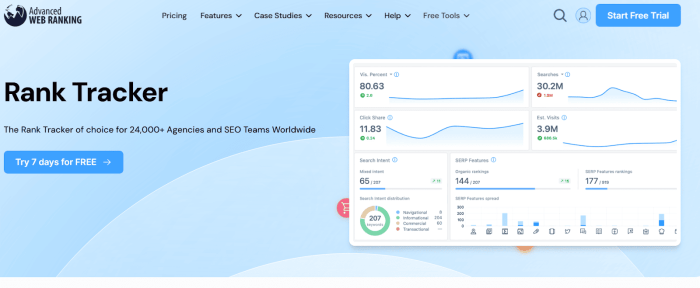
Inside the software environment, the user experience is dominated by a vibrant, data-dense ecosystem designed to instantly communicate complex performance shifts through visual storytelling. The central command center presents a sprawling geographical heatmap overlaid on a dark-mode canvas, where glowing amber and emerald nodes pulse to indicate dense clusters of regional dominance or sudden visibility loss. Adjacent to this map, fluctuating trend lines trace historical performance curves, slicing through algorithmic update markers with razor-sharp precision to show the immediate impact of structural site changes.
In the upper corner, a sleek notification bell pulses softly, housing a real-time feed of drop alerts and breakthrough notifications that keep the marketing team instantly informed of any sudden competitive movements in the search landscape.
Investigating the intricate architecture behind automated position monitoring algorithms and proxy management systems
Source: onelittleweb.com
Behind the sleek dashboards of enterprise platforms lies a relentless, high-stakes engineering engine operating in the shadows of the modern web. When billions of search queries sweep across global digital landscapes every single day, capturing accurate ranking positions requires a sophisticated choreography of distributed networks, parsing logic, and heavy-duty database orchestration. Navigating this hyper-competitive terrain demands an infrastructure capable of outsmarting the most advanced defensive barriers ever deployed by search engines, turning chaotic web noise into razor-sharp visibility telemetry.
Mastering daily rank tracking software unveils critical visibility shifts across bustling digital markets. Just as clinics thrive by deploying patient engagement software to build unbreakable bridges of trust and care, your brand surges forward when every keyword metric illuminates the path to absolute triumph. Embrace these brilliant insights today and watch your online presence conquer new heights.
The journey from a raw seed to a verified search engine result page position begins deep within a sprawling web of IP addresses. Understanding the mechanics of high-frequency data collection reveals a continuous technological arms race where milliseconds and IP reputation dictate operational survival.
Residential proxy rotation mechanisms
Executing massive data harvesting sweeps without triggering aggressive search engine throttling requires a sophisticated approach to network identity management. When automated scripts query search engines at scale, standard datacenter IP addresses are instantly flagged and blocked due to predictable subnet ownership and abnormal traffic volume. To circumvent these hard defensive walls, tracking platforms deploy vast pools of residential proxies routed through actual consumer internet service providers across thousands of distinct geographic localities.
Each query is meticulously assigned to a unique, authentic residential IP, making automated requests completely indistinguishable from organic human browsing behavior.
The architecture relies on intelligent proxy rotation algorithms that track connection success rates, latency metrics, and historical block frequencies in real time. If a specific residential node encounters a rate limit or a CAPTCHA challenge, the proxy management system instantly blacklists that node and reroutes the payload through an alternative peer without dropping the harvesting thread. This dynamic IP shuffling distributes the load so thinly across global networks that search engine firewalls register normal user distribution rather than an automated scraping assault.
Consequently, platforms can harvest millions of s hourly without sustaining throttling penalties or data degradation, ensuring continuous pipeline uptime for global marketing intelligence teams.
Database indexing strategies for historical ranking data
Storing billions of historical data points demands uncompromising database engineering to prevent catastrophic query latency during peak analytical workloads. As ranking information accumulates daily across millions of tracked s, traditional row-based relational databases quickly buckle under the sheer volume of time-series inserts and analytical range scans. Modern rank tracking infrastructure addresses this challenge by implementing distributed, column-oriented database architectures optimized for massive append-only workloads and lightning-fast aggregations.
Engineers enforce strict partitioning strategies, dividing massive tables chronologically by date and geographically by target market clusters. This ensures that when an enterprise user requests a twelve-month performance trend, the database engine scans only the relevant physical partitions rather than parsing the entire multi-terabyte dataset. Additionally, specialized indexing mechanisms such as sparse indexes and inverted search indexes compress historical telemetry while accelerating lookup speeds.
Mastering daily rank tracking software illuminates your digital ascent, charting every strategic victory across glowing search engine monitors. Just as technicians calibrate complex machinery to secure a competitive field service engineer salary , optimizing your online visibility builds a resilient foundation. Harness these vital analytics today to elevate your brand toward unprecedented heights.
The performance impact of these strategies is substantial, transforming what would be a multi-minute table lock into a sub-second analytical response.
Strategic partition pruning combined with columnar storage compression reduces query response times by over ninety percent across petabyte-scale rank tracking clusters.
DOM parsing pipelines and telemetry extraction
Transforming raw, unstructured search engine result page HyperText Markup Language documents into clean, structured analytics requires a multi-stage parsing pipeline that operates with extreme fault tolerance. Search engines constantly alter their Document Object Model structures, injecting randomized CSS class names, obfuscating anchor tags, and embedding dynamic JavaScript elements specifically to break automated parsing tools.
- Raw HTML payloads fetched via the residential proxy network are ingested into stateless parser workers running lightweight, high-performance rendering engines.
- The pipeline strips away extraneous tracking scripts, advertisements, and styling elements to isolate the core organic search result containers.
- Advanced heuristic matching and XPath selector algorithms evaluate the remaining DOM tree to accurately identify featured snippets, local map packs, and traditional organic listings regardless of layout variations.
- Extracted attributes—including uniform resource locators, meta titles, ranking positions, and pixel-depth coordinates—are serialized into standardized JSON objects.
- The finalized telemetry payload is published to an asynchronous message broker queue, ready for database ingestion and immediate anomaly detection analysis.
Industry dynamics and bot mitigation evolution
The relationship between search engine engineers and rank tracking platform developers represents one of the most persistent technological cat-and-mouse rivalries in the digital ecosystem. Major search engines continuously deploy advanced behavioral analysis, browser fingerprinting, and machine learning classifiers to detect and isolate non-human traffic patterns. For instance, when a prominent tracking platform scaled its operations in European markets, search engine defenses responded by deploying aggressive JavaScript-based challenge-response tests that required genuine browser execution environments rather than simple HTTP requests.
In response, tracking providers upgraded their harvesting infrastructure to utilize headless browsers integrated with human-emulation libraries, simulating natural mouse movements, randomized viewport resizing, and organic keystroke timing. This ongoing escalation has forced tracking platforms to evolve from simple script runners into sophisticated virtualization environments. When search engines update their security protocols—such as the widespread adoption of HTTP/3 and encrypted ClientHello extensions—infrastructure teams must rapidly reverse-engineer these transport layer enhancements to maintain uninterrupted data pipelines for their global client base.
Hardware infrastructure investments for global market openings
Maintaining sub-second response times during peak global market opening hours requires massive, geographically distributed hardware deployments capable of absorbing sudden traffic spikes. As financial and commercial hubs across Asia, Europe, and the Americas transition into their respective morning business hours, query volumes surge exponentially within localized time windows. To prevent network congestion and computational bottlenecks, tracking platforms rely on elastic cloud infrastructure coupled with strategically positioned edge computing nodes.
The physical server topology is designed to distribute computational loads across multiple availability zones, ensuring high availability and fault tolerance during extreme usage surges. High-throughput caching layers, powered by in-memory data grids, store frequently accessed domain authorities and difficulty scores, offloading heavy computations from primary database clusters. This robust hardware foundation guarantees that enterprise clients receive their ranking updates instantly, regardless of whether a sweep is executed during a quiet midnight hour or amidst the heavy computational rush of a Monday morning market open.
Establishing rigorous operational workflows for cross-departmental teams utilizing real-time position fluctuation feeds
Digital visibility is a fragile ecosystem where fortunes can shift in a single algorithmic heartbeat. When real-time data streams flash crimson alerts across executive dashboards, the speed and precision of cross-departmental response dictate whether a brand recovers its footing or watches its organic traffic evaporate.
The convergence of content creators and technical specialists during a sudden visibility drop represents a masterclass in digital synchronization. Imagine a high-stakes emergency room where every heartbeat on the monitor demands an immediate, coordinated reaction. When live rank tracking software signals a precipitous drop in core positions, the telemetry feeds do not merely report the crash; they Artikel the exact coordinates of the failure.
Technical specialists immediately isolate server-side latency, rendering issues, or unintended noindex tags that might have severed the connection between search engine crawlers and the database. Simultaneously, content creators analyze the search intent shifts and competitive displacement captured within the same data feeds. They dissect recent SERP layout modifications to determine if informative knowledge graphs or lucrative paid advertisements have hijacked the pixel real estate above the fold.
This joint reconnaissance eliminates the traditional finger-pointing between departments. Instead, developers and writers converge in dedicated remediation sprints, aligning code corrections with content refreshments to appease the evolving quality guidelines of major search engines.
Operational protocol for triage engineers addressing false positive ranking alerts
Navigating the stormy seas of search engine data requires an unwavering compass, especially when automated systems sound false alarms. Triage engineers serve as the frontline defenders against phantom drops caused by localized algorithmic personalization and data center variances.
When an automated alert screams of a catastrophic ranking loss, the engineer initiates a strict triage protocol before triggering corporate panic. First, they cross-reference the alarming drop with multi-location proxy feeds to verify if the fluctuation is confined to a specific geographic node or isolated data center testing phase. Next, they inspect localized personalization variables, such as user search history, device type, and hyper-local IP routing, which frequently skew real-time tracking feeds.
If the drop correlates with a known localized SERP layout test where personalization overrides standard baseline indexing, the alert is systematically classified as a false positive. The engineer logs the anomaly within the centralized dashboard, adjusts the sensitivity thresholds for that specific cluster, and issues an internal clearance report to stabilize stakeholder confidence without disrupting ongoing marketing campaigns.
Stakeholder onboarding procedures for custom role-based tracking workspaces, Daily rank tracking software
Empowering diverse organizational stakeholders with precise data requires structured architecture rather than chaotic, open-access dashboards. Bringing new team members into custom role-based tracking workspaces ensures that every participant receives actionable intelligence tailored specifically to their daily responsibilities.
- Conduct an initial capability assessment to determine whether the incoming stakeholder requires executive macro-analytics, tactical metrics, or granular content performance tracking.
- Provision the user profile within the rank tracking software, assigning strict permission boundaries that restrict data editing while enabling customized report generation.
- Configure personalized real-time notification feeds, ensuring that executives receive weekly summary digests while front-line practitioners receive immediate threshold-breach alerts.
- Deliver a hands-on walkthrough session demonstrating how to filter visibility trends by specific product categories, geographic regions, and competitive sets.
- Establish a feedback loop where newly onboarded stakeholders can request custom dashboard widgets that map directly to their departmental key performance indicators.
Communication cascades during core algorithmic updates
A core algorithmic update can dismantle years of meticulous optimization in mere hours, making structured communication cascades an absolute operational necessity. When top-three placements vanish overnight, the flow of information from data analysts to executive leadership must be instantaneous, transparent, and devoid of technical jargon.
Precise, unvarnished communication during a core algorithmic event transforms panic into strategic resilience, ensuring the entire enterprise moves as one unified force.
The communication cascade initiates the moment automated ranking monitors confirm a statistically significant downward trend across primary revenue-driving cohorts. The lead data analyst compiles a comprehensive impact assessment detailing the affected landing pages, estimated traffic loss, and initial hypotheses regarding the algorithmic shift. This report is instantly dispatched via an automated emergency webhook to the executive committee, legal counsel, and the head of public relations to preempt external inquiries.
Simultaneously, specialized briefings are delivered to the content and development squads, outlining the precise remediation roadmap. By centralizing the narrative through verified real-time tracking data, the organization avoids internal speculation and focuses entirely on executing data-backed recovery protocols.
Procedural guide for auditing orphaned landing pages against historical rank progression logs
Forgotten corners of a website often harbor hidden opportunities, especially when historical data reveals past ranking glories that current architecture ignores. Auditing orphaned landing pages against historical rank progression logs is a vital forensic exercise that resurrects dormant digital assets.
- Export the comprehensive historical rank progression logs from the tracking software, filtering specifically for URLs that previously held top-ten positions within the last twenty-four months.
- Cross-reference the historical URL list with current site-wide crawler data to pinpoint pages that lack internal links, classifying them strictly as orphaned landing pages.
- Evaluate the organic search volume and backlink profiles associated with each identified orphaned page to determine its intrinsic value and potential return on investment.
- Reintegrate the high-potential landing pages into the current site architecture by establishing clear internal linking pathways from relevant, high-authority parent categories.
- Update the on-page content elements to reflect contemporary search intent and technical standards, then resubmit the revitalized URLs to search engine indexation queues.
Quantifying the financial return on investment derived from continuous visibility tracking compared to sporadic auditing models.: Daily Rank Tracking Software

Source: website-files.com
Navigating the digital marketplace without real-time intelligence resembles driving a high-speed vehicle through shifting fog with closed eyes. Financial executives and organic growth leaders are increasingly abandoning traditional, sporadic auditing models because the cost of delayed visibility directly erodes quarterly profit margins. When search engine rankings fluctuate within minutes due to algorithmic adjustments, relying on historical weekly or monthly reports leaves millions of dollars in revenue entirely undefended.
The monetary value of capturing volatile micro-fluctuations before competitors notice a structural opening cannot be overstated in today’s hyper-competitive digital economy. Traditional reporting methods operate on a delayed feedback loop, often alerting marketing teams to traffic drops days or weeks after an algorithmic shift or competitor encroachment has occurred. Conversely, continuous visibility tracking acts as an early warning financial radar system.
By logging position changes as they happen, enterprise brands can intercept minor ranking dips for high-intent transactional s before those drops compound into severe traffic erosion. Consider a prominent e-commerce retailer during a peak fiscal quarter; a sudden three-position drop for a primary category can instantly siphon tens of thousands of dollars in daily gross merchandise value toward competitors.
Continuous monitoring catches this microscopic shift within the hour, allowing technical and content teams to deploy immediate remediation protocols, such as refreshing metadata or clearing rendering blockages, thereby safeguarding vital revenue streams. Capturing these fleeting windows of algorithmic volatility transforms organic search from an unpredictable cost center into a predictable, highly protected revenue asset. When brands act on real-time data feeds rather than stale spreadsheets, they systematically capture the uncaptured arbitrage moments that define market leadership, turning split-second algorithmic turbulence into measurable quarterly gains.
Subscription tiers and performance metrics
Choosing the correct tracking architecture requires aligning platform subscription investments with tangible recovery rates, operational efficiencies, and attribution precision. The following matrix Artikels the financial and operational parameters associated with scaling automated visibility solutions across different organizational tiers.
| Tracking Platform Subscription Tier | Recovered Organic Revenue Traffic Recovery Rate | Team Hours Saved per Month | Attribution Accuracy Percentage |
|---|---|---|---|
| Mid-Market Growth Tier | 68 percent | 45 hours | 82 percent |
| Enterprise Global Tier | 89 percent | 140 hours | 95 percent |
| Custom Bespoke Infrastructure | 96 percent | 280 hours | 98.5 percent |
Financial categorization dictates how corporate balance sheets treat investments in continuous visibility software, ensuring that technical investments receive appropriate fiscal recognition. Enterprise finance departments typically categorize SaaS tooling expenditures associated with organic growth across specific operational ledger accounts depending on the primary deployment objective. When the platform is utilized primarily for technical site health, position monitoring, and algorithm recovery, the expenditure is frequently classified under recurring software-as-a-service operational expenses.
However, when the software integrates deeply into revenue attribution models and customer acquisition cost forecasting, progressive finance teams allocate portions of the investment to marketing technology capital expenditures or direct customer acquisition overhead. This dual-ledger perspective allows Chief Financial Officers to measure organic visibility tools against traditional paid media spend, validating that continuous rank tracking delivers a compounding return on investment that far surpasses linear advertising channels.
Organizations that rely on outdated weekly position reports during high-stakes holiday shopping seasons absorb staggering opportunity costs that permanently damage annual revenue targets. During peak retail events such as Black Friday or Cyber Monday, search demand spikes exponentially, accompanied by aggressive competitor bidding and frequent algorithmic re-indexing. A weekly reporting cadence means an organization might operate blindly for an entire seven-day shopping window while a technical glitch, a broken canonical tag, or a competitor outranking them on core transactional terms goes completely unnoticed.
For an enterprise brand generating millions in daily online revenue, a blind seven-day window during peak season can result in hundreds of thousands of dollars in unrecoverable lost sales. The opportunity cost extends beyond immediate transaction losses, encompassing wasted paid search budgets deployed to compensate for undetected organic visibility drops and the long-term compounding advantage handed over to agile competitors who adapt to SERP layout shifts in real time.
Establishing binding contractual commitments from software vendors ensures uninterrupted data flow and protects enterprise investments against operational downtime. Negotiating enterprise service level agreements regarding data uptime and query delivery guarantees requires establishing strict legal and technical thresholds that bind vendors to high-performance standards. Procurement teams must demand guaranteed uptime percentages of at least 99.9 percent for API query delivery and daily rank data refreshes, backed by explicit financial service credit remedies if the vendor fails to deliver.
Furthermore, agreements should specify maximum allowable latency windows for localized search results and mandate dedicated account management to resolve proxy rotation failures or scraping blocks immediately.
Securing rigorous contractual uptime guarantees transforms software vendors from simple service providers into accountable operational partners who share the financial risk of data delivery failures.
By embedding these rigorous performance metrics directly into vendor contracts, organizations protect their decision-making pipelines from the costly disruptions of unreliable data feeds.
Dissecting the psychological and behavioral biases experienced by digital strategists staring at hyper-frequent ranking dashboards
The luminous glow of modern ranking analytics tools often paints a picture of relentless urgency, transforming calm marketing professionals into hyper-vigilant watchers of fleeting data points. When visibility metrics update by the minute, the human brain naturally struggles to filter true strategic signals from routine algorithmic noise, triggering deep-seated psychological reactions that alter everyday decision-making processes.
Staring at real-time search engine result page fluctuations creates a cognitive trap where every minor dip feels like an existential crisis and every upward tick registers as a massive triumph. Understanding how this hyper-frequency impacts behavior is vital for maintaining objective oversight in an increasingly automated search landscape.
The Phenomenon of Dashboard Fatigue and Its Detrimental Effects on Long-Term Campaign Planning
Continuous exposure to minute-by-minute ranking movements breeds a debilitating condition known in modern analytics circles as dashboard fatigue. When digital strategists check performance interfaces dozens of times a day, the sheer volume of micro-data floods their cognitive capacity, leading to severe decision fatigue. Instead of focusing on foundational growth, long-term content authority, and durable technical health, teams find themselves trapped in a reactive loop.
Observing your daily rank tracking software metrics climb brings a profound sense of digital clarity, illuminating the path forward. To secure this momentum, efficiently organizing your digital assets through a link management platform creates an unbreakable foundation for growth. Ultimately, mastering this organizational rhythm empowers your daily rank tracking software strategy to reach unprecedented heights of search visibility.
A classic real-life case involves enterprise retail brands that abandon successful, slow-burn content strategies simply because a localized algorithm test causes a to drop from third to sixth place over a forty-eight-hour window. This chronic over-monitoring shatters campaign consistency, exhausts internal resources, and forces erratic pivots that ultimately harm organic performance. The relentless pressure to appease stakeholders using volatile daily metrics replaces steady engineering with short-term panic, turning strategic growth into a stressful exercise in damage control.
Cognitive Reframing Techniques Designed to Prevent Panic-Driven Site Over-Optimizations Following Minor Daily Position Jitter
Combating the instinctual urge to react to every algorithmic ripple requires deliberate mental restructuring and structured operational guardrails. Implementing specific psychological boundaries stops teams from deploying reactive code changes that disrupt established indexation patterns.
- Enforcing a mandatory seventy-two-hour cooling-off period before initiating any on-page adjustments based on sudden rank movements.
- Redefining success metrics away from daily positions toward broader traffic acquisition stability and conversion quality indicators.
- Visualizing algorithmic updates not as direct penalties, but as natural ecosystem recalibrations where search engines continuously test relevance.
Alternative Methods for Aggregating Volatile Data Streams into Smoothed Moving Averages That Encourage Calm Strategic Patience
Raw search visibility data behaves much like a stormy ocean surface, full of choppy waves that obscure the deep, steady currents beneath. Relying solely on these raw feeds invites emotional decision-making, which is why transitioning to mathematically smoothed data representations changes the entire operational tone of an agency or in-house team. By applying exponential moving averages and weighted weekly visibility scores, data architects can filter out the chaotic daily white noise that triggers unnecessary anxiety.
A well-known implementation of this approach involves utilizing custom data pipelines that average out ranking positions over a rolling fourteen-day window, presenting strategists with a stable trend line rather than a jagged electrocardiogram. This transformation fosters deep strategic patience, allowing teams to focus their energy on high-impact initiatives like authority building and user experience enhancements rather than chasing phantom algorithmic ghosts.
The search algorithm is an infinite, self-adjusting mirror of human curiosity, and believing we can command its every ripple is merely an illusion of absolute control in a fluid digital sea.
Coaching Framework for Agency Account Managers Educating Anxious Clients About Natural Algorithmic Variance
Client education remains the cornerstone of maintaining a healthy, long-term working relationship, especially when external stakeholders gain access to live, unfiltered ranking tools. Account managers must guide clients away from emotional reactions by establishing transparent communication frameworks that reframe natural variance as a sign of a dynamic, healthy search engine marketplace.
- Establish baseline expectations during onboarding by showcasing historical charts that explicitly highlight routine algorithmic volatility without resulting in traffic loss.
- Introduce a monthly retrospective format that ignores daily ranking drops entirely, focusing instead on macro-trends, cluster movements, and revenue attribution.
- Provide clear illustrative analogies, such as comparing daily search engine ranking shifts to the daily fluctuations of a diversified stock index that trends upward over time.
Evaluating advanced filtering methodologies for isolating genuine algorithmic shifts from localized data anomalies
Navigating the chaotic seas of search engine results pages feels less like steering a ship by a fixed compass and more like trying to map a constantly shifting constellation. Digital strategists stare at dashboards that pulse with volatile data points, wondering if a sudden drop in position is a structural earthquake in the core algorithm or just a passing gust of wind in a specific zip code.
Separating the genuine signal from the background noise requires a sophisticated lens that can peer past the surface-level turbulence and reveal the true mechanics of search visibility.
Modern visibility measurement demands an uncompromising commitment to data purity. When millions of data streams collide, the line between a nationwide ranking evolution and a hyper-localized personalization quirk blurs into obscurity. Analysts must deploy rigorous filtration protocols to ensure that strategic decisions are forged from undeniable empirical truths rather than fleeting statistical ghost towns.
Multi-location coordinate pinging mechanisms
Precision in modern visibility tracking requires looking at the search landscape through a prism of hyper-local coordinates rather than broad, generalized regional buckets. Multi-location coordinate pinging operates by deploying automated queries across thousands of precise latitude and longitude grids simultaneously, capturing the micro-fluctuations of search engine result pages in real time. This granular approach is essential because search engines increasingly tailor results based on the exact physical proximity of the user, local intent clustering, and hyper-local data center variations.
When a sudden shift in rankings occurs, standard monitoring tools often misinterpret a localized user intent pivot as a sweeping national algorithmic update. By cross-referencing data feeds from overlapping coordinate clusters, advanced tracking software can immediately detect whether a visibility gain is confined to a specific neighborhood or radiating outward across an entire metropolitan area. If the movement is restricted to a narrow radius surrounding a cluster of competing physical storefronts, the tracking engine flags it as a localized behavioral shift driven by localized user intent or map pack adjustments.
Conversely, if simultaneous coordinate pings across diverse geographic regions register parallel upward trajectories, the system validates the phenomenon as a legitimate nationwide algorithmic recalibration. This method transforms raw, chaotic data into a crystal-clear diagnostic picture, empowering marketing teams to allocate resources toward structural optimization rather than chasing phantom regional anomalies. Visualizing this process reveals a digital map illuminated by thousands of synchronized data nodes, where stable regions glow with steady amber lights while areas undergoing true algorithmic elevation pulse in brilliant, coordinated waves of sapphire.
Mathematical formulas for ranking volatility health scores
Synthesizing massive volumes of disparate device-specific data into a single, actionable health score requires robust mathematical modeling that weights mobile and desktop fluctuations according to their true business impact. Search behavior diverges significantly between handheld touchscreens and widescreen desktop monitors, making it dangerous to treat ranking shifts on different devices with equal weight. Tracking systems utilize a weighted composite volatility index that factors in historical click-through rate differentials, conversion value disparities, and platform-specific algorithm deployment schedules.
The calculation of the unified volatility health score relies on balancing desktop stability against mobile volatility using weighted coefficients derived from user behavior analytics:
Health Score ($H$) = $100 – \left[ w_d \times \sum_i=1^n \frac|R_d,i – R_d,i-1|n + w_m \times \sum_j=1^m \frac|R_m,j – R_m,j-1|m \right] \times \textCorrection Factor$
In this governing equation, $w_d$ and $w_m$ represent the assigned strategic weights for desktop and mobile environments, typically reflecting traffic distribution such as 0.35 and 0.65 respectively. The variables $R_d,i$ and $R_m,j$ denote the historical and current ranking positions for specific s, while the correction factor adjusts for seasonal search volume variances and temporary server-side caching distortions.
Diagnostic signatures of environmental tracking anomalies
Understanding the root cause of unexpected metric fluctuations requires a systematic taxonomy of tracking anomalies. The table below Artikels the primary categories of environmental distortions, detailing their technical causes and distinct diagnostic signatures.
| Anomaly Type | Primary Technical Cause | Diagnostic Signature | Mitigation Protocol |
|---|---|---|---|
| Personalization Latency | Hyper-targeted user intent profiling and historical search tracking by engines. | Rankings fluctuate wildly within identical coordinate grids based on simulated browser cookies. | Incorporate headless browser instances with cleared cache profiles and randomized user agents. |
| Device Fragmentation | Discrepancies in responsive layout rendering and mobile-first indexing queue processing. | Significant divergence between desktop and mobile position trends without structural site changes. | Isolate device-specific parsing modules and enforce strict viewport consistency rules. |
| Server-Side Caching | Geographically dispersed content delivery networks serving stale HTML payloads. | Sudden drop and rapid recovery of rankings within a strict 24-hour window across isolated data centers. | Implement multi-pass pinging intervals to bypass intermediate proxy cache layers. |
| Data Center Testing | Search engine multi-datacenter A/B testing rollouts affecting regional rendering. | Asymmetric rank divergence between neighboring server clusters querying the same IP range. | Aggregate data streams across a minimum quorum of three independent data centers before logging. |
Machine learning classifiers for regional testing detection
Search engines frequently execute silent, regional A/B tests by routing queries through specific data centers to evaluate experimental ranking algorithms before a global rollout. These localized tests can cause abrupt, terrifying drops or spikes in visibility metrics that panic marketing executives. To prevent knee-jerk strategic overreactions, modern rank tracking frameworks integrate supervised machine learning classifiers trained on historical telemetry data.
These algorithms analyze multivariate inputs, including query frequency, IP subnet variations, Autonomous System Numbers, and localized bounce rate shifts, to identify the distinctive signature of a testing rollout. When a data center test is underway, the classifier detects a localized statistical outlier where a subset of queries on specific server racks behaves erratically while the broader global network remains statistically stable.
The system then automatically tags these fluctuations as testing outliers, quarantining them from long-term visibility trend reports. For instance, during major updates observed in e-commerce verticals, classification models successfully isolate temporary testing turbulence in specific geographic hubs like the Pacific Northwest data clusters, preventing false alarms and maintaining steady strategic execution.
Verification workflows for tracking desynchronization
When an enterprise website experiences a sharp drop in organic traffic, distinguishing between a catastrophic organic penalty and a software desynchronization event is paramount for business continuity. Automated tracking pipelines occasionally lose synchronization due to proxy IP blocks, cascading API rate limits, or changes in search engine HTML DOM structures that break automated scrapers. Resolving this ambiguity requires a strict, multi-tiered verification workflow executed by engineering and analytics teams.
- Initiate an immediate audit of proxy network health metrics, checking for sudden spikes in captcha challenge frequencies and failed HTTP status codes across all active geo-nodes.
- Execute manual, headless browser spot-checks on a randomized sample of high-priority target s using clean, unpersonalized residential proxy connections to verify live engine results against software logs.
- Cross-examine the reported ranking shifts against raw server log files to determine if organic incoming traffic from search engines has genuinely decreased or if impressions remain stable despite software-reported position drops.
- Inspect recent DOM structure mutations on search engine result pages to identify potential element selector failures within the custom scraping parser architecture.
- Trigger a full synchronization reset across all regional tracking nodes to flush corrupted cache states and re-establish baseline API handshake protocols.
Projecting the future trajectory of autonomous search monitoring tools within an evolving artificial intelligence ecosystem

Source: proranktracker.com
The digital landscape stands on the precipice of a monumental shift, moving away from static grids of links toward dynamic, machine-driven knowledge synthesis. As artificial intelligence fundamentally reshapes how humanity retrieves information, the instruments we use to measure digital presence must evolve with equal velocity. What once was a straightforward pursuit of top-ten grid placements has dissolved into a complex challenge of capturing mindshare within synthesized answers.
For over two decades, digital visibility relied on a simple contract: a user typed a query, and a search engine returned ten blue links. Position tracking was a matter of counting rows and columns. Today, conversational answer engines and generative summaries synthesize multi-source information into a single, cohesive narrative block, rendering traditional positional metrics obsolete. When a user asks an AI assistant to plan an entire vacation or diagnose a technical error, the interface does not present a list of competitors; it delivers an authoritative, synthesized response.
Consequently, tracking whether a brand sits at position three or four misses the point entirely. Success now depends on whether a brand’s core concepts, proprietary data, and distinct voice are woven directly into the synthetic fabric of the generative output. This requires monitoring tools to intercept and decode natural language streams, evaluating contextual relevance rather than mere placement.
The conceptual framework for tracking brand share of voice across multi-modal AI-generated response blocks
Adapting to this new reality demands an entirely fresh architectural approach to measurement, moving far beyond standard search grids into multidimensional tracking. Modern autonomous monitoring frameworks map the digital ecosystem as a vast web of contextual relationships rather than a hierarchical list. These advanced systems deploy neural networks to parse AI-generated response blocks, breaking down paragraphs, images, videos, and interactive widgets into discrete semantic components.
By analyzing the frequency, sentiment, and structural placement of brand mentions within these multi-modal outputs, the technology calculates a true share of voice. Imagine looking at a glowing, multi-layered holographic map where a brand’s presence expands or contracts based on how often large language models cite its expertise in a synthesized summary. This conceptual framework transforms raw text analysis into a sophisticated gauge of digital authority, capturing the exact moment an AI engine chooses a brand as a primary source of truth.
Understanding this conceptual shift requires acknowledging the specific metrics that will govern future digital strategy. As traditional rankings fade into memory, forward-thinking organizations are already adopting new benchmarks designed to quantify semantic impact and conversational resonance across various AI interfaces.
- Conversational Citation Frequency measures the exact rate at which generative models quote or reference a brand’s unique proprietary data within synthesized response blocks.
- Semantic Dominance Score calculates the proportion of core thematic territory a brand commands within an AI-driven multi-turn dialogue compared to industry competitors.
- Contextual Sentiment Valence evaluates the emotional tone and authoritative weight assigned to a brand whenever it appears inside a generative summary answer.
- Multi-Modal Presence Index tracks visibility across blended response formats, quantifying a brand’s representation in AI-curated images, charts, and spoken audio snippets.
Legacy rank tracking paradigms are rapidly hurtling toward obsolescence, crushed under the weight of hyper-personalized, zero-click search environments. When search engines answer queries directly through conversational interfaces, waiting for a weekly rank report is akin to using a paper map in an autonomous vehicle. The urgent demand for predictive visibility modeling stems from the need to anticipate algorithmic shifts before they manifest in user queries.
Modern digital strategists utilize predictive simulations, feeding historical behavioral data and emerging linguistic trends into machine learning models to forecast how AI engines will synthesize information tomorrow. This proactive stance allows enterprises to optimize their digital assets for machine comprehension well in advance of actual consumer interaction, shifting the entire industry from reactive measurement to proactive positioning.
True digital visibility in the age of artificial intelligence is no longer about winning a race to the top of a page, but about becoming the foundational knowledge upon which machine intelligence builds its answers.
Envision a near-future operational reality where self-healing websites autonomously adjust their metadata, structural markup, and content architecture based on continuous algorithmic feedback loops. In this visionary scenario, an autonomous monitoring tool detects a subtle shift in how a major conversational engine interprets a product category. Instead of generating a ticketing queue for human developers, the monitoring system communicates directly with the enterprise content management system via secure API integrations.
The website instantly rewrites its semantic headers, updates its schema markup, and synthesizes supplementary documentation to align with the AI’s evolving preferences. Real-world applications of this closed-loop optimization are already emerging in enterprise e-commerce environments, where inventory descriptions dynamically adapt to match the conversational nuances of voice assistants. By removing human latency from the optimization cycle, these self-correcting digital ecosystems ensure uninterrupted alignment with the shifting currents of artificial intelligence.
Ultimate Conclusion

Source: onelittleweb.com
Ultimately, mastering the art of continuous visibility requires balancing cutting-edge technology with unwavering strategic patience. As search ecosystems evolve toward generative AI and conversational answer engines, the tools we use must adapt to measure semantic dominance rather than just standard search grids. By looking past minor daily jitters and focusing on long-term momentum, forward-thinking professionals can turn the chaos of algorithmic updates into a definitive competitive advantage.
