how to case change in excel stands as a vital professional capability that transforms chaotic, messy spreadsheets into pristine landscapes of polished data. Across modern corporate environments and personal projects alike, dirty text strings have long frustrated meticulous analysts who strive for perfection within their digital ledgers.
Today, powerful native functions, hidden automation macros, and intelligent predictive algorithms converge to solve this universal formatting challenge once and for all. By embracing these sophisticated techniques, you unlock the remarkable potential to reshape massive data architectures seamlessly, turning everyday spreadsheet hurdles into stepping stones toward absolute organizational clarity.
Transforming stubborn text strings by mastering native spreadsheet formula functions for instantaneous alphabetical adjustments

Source: softwareaccountant.com
Mastering how to case change in excel transforms messy text into polished perfection instantly. Picture organizing messy data seamlessly, much like implementing clay lead scoring automation examples field mappings to align pipeline targets. This breakthrough workflow elevates daily productivity, ensuring every spreadsheet remains pristine and professionally structured.
Data sets often arrive in chaotic states, bearing an unpredictable mix of uppercase and lowercase letters that disrupt professional standards and database integrity. Navigating this textual disorder requires precise mechanical intervention rather than tedious manual retyping. By deploying native spreadsheet formulas, operators can instantly reshape entire columns of unruly data into polished, uniform assets with a single keystroke. This silent revolution inside the grid transforms how administrative professionals interact with raw information, converting hours of frustrating correction into an effortless operational rhythm.
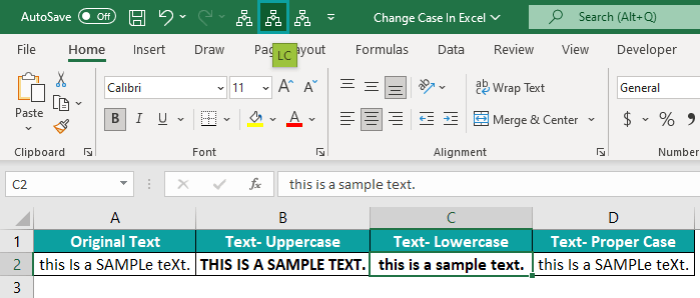
At the heart of text normalization lie three foundational formulas: UPPER, LOWER, and PROPER. The UPPER function acts as a digital megaphone, forcing every single alphabetical character within a target string into strict uppercase alignment, which is critical for standardized codes and SKU identifiers. Conversely, the LOWER function applies a soothing hush, driving all characters into lowercase to harmonize email addresses and system usernames.
Sitting harmoniously between these extremes is the PROPER function, a sophisticated capitalizer that evaluates word boundaries by detecting spaces and punctuation, ensuring that every individual word starts with a capital letter while the remaining characters gently recede into lowercase. Operating these functions requires nothing more than referencing the source cell within the parentheses, allowing the calculation engine to parse the underlying ASCII values and instantly render the corrected typography in real time.
Formula syntax and operational mapping
Deploying these text modification tools successfully depends on exact structural accuracy within the formula bar. The table below Artikels the specific syntax, active inputs, expected transformations, and tactical nuances required for flawless execution across any standard spreadsheet environment.
| Formula Syntax | Target Cell Input | Resulting Transformation | Operational Notes |
|---|---|---|---|
=UPPER(text) |
=UPPER("quarterly report") |
QUARTERLY REPORT | Ignores existing numbers and special characters while converting all alphabetical glyphs to uppercase. |
=LOWER(text) |
=LOWER("CUSTOMER.SERVICE@DOMAIN.COM") |
customer.service@domain.com | Essential for standardizing email inputs before uploading databases to customer relationship management systems. |
=PROPER(text) |
=PROPER("john von neumann") |
John Von Neumann | Carefully capitalizes the first letter of every distinct word, though specialized compound names may require manual review. |
Workflow integration and keystroke execution
Integrating these text-shaping mechanics into an existing data pipeline demands a fluid sequence of keyboard actions and structural foresight. When managing large tables of incoming information, operators must insert a temporary helper column adjacent to the messy source data to safely execute the transformation without overwriting original records. The precise keystrokes involve navigating to the target output cell, typing the equals sign followed by the chosen function name, and using the arrow keys to select the raw data cell before pressing the enter key.
Once the formula calculates the first row, double-clicking the fill handle in the bottom-right corner of the cell instantly propagates the function down the entire length of the dataset. For permanent integration, operators highlight the newly calculated results, execute the copy command, and immediately apply a values-only paste operation to sever the dependency on the helper column before deleting the original raw data.
Real-world datasets frequently harbor invisible gremlins, particularly trailing and leading whitespace that disrupts proper capitalization and corrupts database lookups. When users attempt to apply the PROPER function to strings burdened by trailing spaces, the calculation engine often misinterprets the boundary, leading to persistent formatting errors. To combat this digital debris seamlessly, professionals wrap the core capitalization formula inside the TRIM function, effectively stripping out extraneous spacing at the exact moment the alphabetical adjustment takes place.
For instance, inputting
=PROPER(TRIM(A2))
forces the spreadsheet to sanitize the raw string by eliminating redundant spaces first, ensuring that the subsequent casing transformation reads the true boundaries of the text string with absolute mathematical precision.
Mastering text casing transforms messy spreadsheets into polished professional assets. As data streams expand across files, you can seamlessly how to do vlookup in excel with two spreadsheets to bridge isolated records into a unified vision. Elevate your analytical workflow today by refining text formats with ultimate precision and unstoppable momentum.
Leveraging modern flash recognition features to magically predict and reformat messy name lists without typing formulas
Source: excelmojo.com
In the digital workspace, messy data often arrives like an uninvited storm, scattering uppercase chaos and reversed name structures across pristine spreadsheets. Transforming these stubborn records no longer requires complex programming or exhaustive manual editing, thanks to intelligent software features designed to anticipate human intent. By simply demonstrating the desired transformation once or twice, users can activate a sophisticated neural prediction engine that instantly reorganizes thousands of chaotic entries in mere seconds.
Mastering text formatting by learning how to case change in excel transforms chaotic data into polished rows, much like finding your digital focus when you sign up for 100 sms newsletters at once free to streamline your daily inbox updates. By applying these smart spreadsheet formulas today, your professional reports will radiate clarity, precision, and renewed organizational confidence.
Beneath the sleek interface of modern spreadsheet applications lies a silent, powerful pattern-matching intelligence that revolutionizes how professionals clean data. When a user manually formats the first few rows of a raw data set, the underlying machine learning algorithms immediately spring into action, analyzing the cognitive distance between the original text strings and the newly provided examples. This predictive text engine dissects character positions, spaces, delimiters, and capitalization patterns to reverse-engineer the hidden rules governing the transformation.
Rather than relying on rigid, pre-programmed syntax, the system builds a dynamic probabilistic model that evaluates millions of potential string combinations in milliseconds. As the user supplies consecutive examples, the intelligence continuously refines its internal hypotheses, testing them against edge cases like middle initials, hyphenated surnames, and erratic spacing. This adaptive learning framework detects structural anomalies on the fly, ensuring that the algorithmic prediction scales accurately across vastly different naming conventions without manual intervention.
By recognizing semantic boundaries such as first names, last names, and professional suffixes, the software bridges the gap between raw, unstructured text and beautifully formatted database entries through pure computational observation.
Recognized Naming Conventions
Understanding the versatility of intelligent prediction tools requires examining the specific structural variations the algorithm can decipher and reconstruct effortlessly. The following diverse naming conventions demonstrate the robust pattern recognition capabilities built into modern spreadsheet environments when processing unorganized text.
- Reversing traditional sequences from Last Name, First Name to First Name Last Name format for alphabetical consistency.
- Extracting isolated first names from complex email addresses embedded within a primary contact column.
- Converting lowercase or uppercase block text into properly capitalized title case while stripping unnecessary punctuation.
- Merging fragmented title, first name, and surname columns into a single unified full name string.
- Isolating middle initials and placing them neatly between primary given names and family names.
Manual Demonstration Requirements for Background Parsing
Activating this automated background parsing requires a precise, deliberate sequence of physical actions within the spreadsheet grid to signal the underlying predictive engine. Users must establish an adjacent blank column directly next to the messy source data, effectively creating a dedicated workspace for the transformation. In the very first row of this new column, the user types the exact desired output manually, demonstrating the exact rule the software needs to follow.
Moving immediately to the second row, the user begins typing the second transformed entry, prompting the software’s recognition feature to detect the emerging pattern. At this exact moment, a translucent ghost preview materializes down the entire length of the column, displaying the predicted results for every remaining row. Pressing the Enter key locks in these instantaneous calculations, instantly populating the entire data set with perfectly formatted text without a single formula ever being typed.
Relying heavily on visual pattern recognition brings distinct operational limitations, particularly concerning volatile data updates when source columns change dynamically. Unlike traditional spreadsheet formulas that maintain a live, reactive link to their reference cells, predictive text generations are static snapshots of text created at a specific moment in time. If a user alters the original spelling, adds a new entry, or corrects an error in the source column after the initial parsing has occurred, the automatically generated column will fail to update automatically.
Static predictive text outputs lack dynamic cell referencing, meaning any subsequent alterations to the raw source data require the entire demonstration and parsing sequence to be performed again from scratch.
Consequently, maintaining data integrity in collaborative environments demands vigilant oversight, as outdated records can quietly persist if the underlying source information evolves without triggering a fresh round of intelligent text parsing.
Exporting cumbersome alphanumeric records into external text editors equipped with rapid casing toggles

Source: wallstreetmojo.com
When native spreadsheet formulas reach their functional limits under mountains of chaotic data, the modern professional must look beyond the grid. Venturing outside the familiar workbook environment unlocks a specialized arsenal of external text manipulation utilities designed specifically for heavy-duty text processing. This strategic transition transforms frustrating data cleansing bottlenecks into seamless operational workflows.
External software environments occasionally offer superior batch editing capabilities due to their foundational architecture, which is built entirely around raw character processing rather than structured mathematical calculations. Unlike spreadsheet applications that prioritize cell dependencies, grid arithmetic, and volatile formula recalculation, dedicated text editors operate directly on the raw string buffer. This lightweight structural design allows applications like Notepad++, Visual Studio Code, and advanced word processors to process millions of alphanumeric characters simultaneously without experiencing the latency, memory bloat, or freezing typical of overloaded grid sheets.
Furthermore, these external platforms feature multi-cursor editing, powerful regular expression engines, and dedicated macro recording capabilities that surpass standard cell-based operations. When a database administrator needs to invert the casing of fifty thousand mixed-case product serial numbers instantly, a purpose-built text editor executes the command across the entire document stream in milliseconds, bypassing the overhead of compiling cell arrays and avoiding the rigid constraints imposed by traditional tabular interfaces.
External Application Casing Functionality Matrix, How to case change in excel
Navigating the diverse landscape of external software requires a clear understanding of how different platforms handle textual transformations. Each dedicated tool utilizes distinct shortcuts, menus, or web interfaces to alter letter cases, making a direct feature comparison essential for efficient workflow integration.
| Software Platform | Primary Shortcut | Menu Navigation Path | Key Advantage |
|---|---|---|---|
| Notepad++ | Ctrl + Shift + U / L | Edit > Convert Case to > Uppercase/Lowercase | Extremely lightweight with instant execution on massive log files. |
| Microsoft Word | Shift + F3 | Home Tab > Change Case Icon (Aa) | Includes advanced sentence case and toggle case intelligence. |
| Visual Studio Code | Ctrl + Shift + P | Command Palette > Transform to Upper/Lower Case | Robust multi-cursor support for targeted block editing. |
| Web Conversion Utilities | N/A (Button Click) | Browser Interface > Paste, Convert, Copy | Zero installation required for quick, occasional string formatting. |
Round-Trip Data Migration Methodology
Executing a flawless data migration between the spreadsheet grid and an external text editor requires precise sequential handling to prevent row corruption and data drift. Maintaining the absolute integrity of your records during export and import cycles guarantees that associated values never become misaligned.
- Generate a temporary index column within the spreadsheet containing sequential integers from one to the total row count to serve as a permanent structural anchor.
- Select the target alphanumeric data column alongside the newly created index column, and copy the selection to the system clipboard.
- Paste the raw tab-delimited text into the external text editor, ensuring that columns remain properly aligned through standard tab characters.
- Execute the desired batch casing transformation across the active document buffer using the software’s native toggle shortcuts or menu commands.
- Select all modified text within the external editor, copy the payload back to the clipboard, and return to the original spreadsheet application.
Data integrity is preserved not by avoiding external tools, but by maintaining a strict, indexed lineage for every single row during transit.
Preservation of Original Sorting Orders
Bringing freshly modified text back into the grid safely demands careful adherence to pre-established sequencing rules to avoid catastrophic row mismatches. When alphanumeric strings return from external text editors, subtle formatting shifts or clipboard anomalies can easily disrupt the delicate relationship between transformed text and adjacent financial or operational data.
Transforming messy data by mastering how to case change in excel unlocks immense clarity, mirroring how creators master how to post youtube video on instagram to beam brilliant visual stories across glowing screens. Every polished capital letter shines brightly against a chaotic grid, driving triumphant productivity forward and ensuring your final spreadsheet masterpiece stands ready for the world.
To guarantee that your newly formatted text aligns perfectly with its original context without scrambling mission-critical records, follow these essential structural procedures:
- Paste the newly modified text data into a completely separate, unused staging column adjacent to your main dataset rather than overwriting existing live records immediately.
- Verify that the row count of the incoming data exactly matches the row count of the original sheet by inspecting the final entry against your initial record count.
- Utilize the temporary index column established prior to export as the primary sorting key to re-establish the exact original sequence of your dataset.
- Perform a comprehensive visual and programmatic audit by comparing a random sample of transformed records against historical backups to confirm zero data displacement.
- Delete the auxiliary staging columns and index markers only after the sorting order has been fully verified and locked in place.
Implementing advanced power query transformation steps to cleanse sprawling enterprise databases before final loading
Enterprise data ecosystems rarely arrive at our doorsteps in a pristine, perfectly capitalized state; instead, they flow in as chaotic torrents of mixed-case records, rogue spacing, and erratic character encodings gathered from disparate regional subsidiaries. Picture a colossal digital warehouse where millions of customer profiles reside in fragmented obscurity, waiting for a definitive touch of systemic order before they can fuel executive decision-making.
Harnessing the raw architecture of data transformation allows organizations to intercept messy inputs at the gate, welding rugged structural integrity into the foundational layers of enterprise business intelligence. This rigorous approach shifts text casing management from a reactive, manual spreadsheet chore into an automated, bulletproof operational standard.
When handling text casing inside dedicated Extract, Transform, and Load pipelines, the structural advantages fundamentally redefine organizational data reliability and computational efficiency. Processing textual attributes at the pipeline level rather than downstream inside end-user workbooks ensures absolute architectural consistency across every subsequent reporting layer and analytical model. By centralizing text normalization logic within the server-side ETL framework, database administrators eliminate the persistent risk of human error and fractured reporting standards caused by disparate local spreadsheet formulas.
Furthermore, shifting the heavy computational lifting of string manipulation to robust database engines or cloud-native infrastructure dramatically preserves client-side memory and speeds up dashboard rendering times. This upstream governance acts as an impenetrable shield, guaranteeing that downstream machine learning algorithms and executive scorecards ingest exclusively uniform, impeccably formatted categorical variables. Consequently, data stewards can enforce strict compliance mandates effortlessly, transforming erratic incoming strings into pristine enterprise assets before they ever touch the final data warehouse.
Structural Advantages of Pipeline-Level Text Normalization
Establishing native pipeline transformations requires a deep appreciation of how data streams interact with memory management and schema enforcement during massive batch ingestions. The following points illustrate the core technical mechanisms that elevate pipeline-level text processing above traditional spreadsheet editing methodologies.
- Upstream casing enforcement prevents downstream dashboard fragmentation by ensuring categorical dimensions join seamlessly across disparate relational tables without casing mismatches.
- Server-side string manipulation drastically reduces client-side processing bottlenecks, offloading heavy regex and casing computations to scalable cloud infrastructure or enterprise database servers.
- Centralized transformation scripts eliminate redundant user-level formula creation, establishing a single authoritative source of truth for all corporate nomenclature formatting rules.
- Automated schema validation catches erratic character encodings and null-value anomalies during the ingestion phase, preserving the referential integrity of financial and operational models.
Transformation Syntax Specifications and Performance Matrix
Deploying precise syntax within modern query engines requires balancing expressive text manipulation capabilities with optimal execution times across sprawling enterprise databases. The following performance matrix Artikels the technical parameters, applied query syntax, underlying data types, and operational footprints of essential casing operations.
| Transformation Step Name | Applied Query Syntax | Data Types | Performance Impacts |
|---|---|---|---|
| Proper Case Normalization | Text.Proper([ColumnName]) | Text (UTF-8) | Moderate CPU overhead during initial batch scan; optimizes downstream indexing. |
| Uppercase Standardization | Text.Upper([ColumnName]) | Text (UTF-8) | Low computational latency; highly efficient for strict categorical matching. |
| Lowercase Trimming | Text.Lower(Text.Trim([ColumnName])) | Text (UTF-8) | Low impact; effectively neutralizes trailing whitespace and case variance simultaneously. |
| Conditional Casing Override | if [Region] = "EU" then Text.Upper([Code]) else Text.Proper([Code]) | Text & Logical | Moderate-to-high impact depending on conditional branching depth and dataset size. |
Navigation Sequence for Advanced Query Operations
Accessing the specialized editing environments where complex textual transformations are authored requires traversing a specific graphical interface hierarchy designed for enterprise-grade data engineering. Navigating to the transformation canvas begins by opening the primary data workspace and locating the active data source panel situated on the right-hand side of the application window. Users must right-click the specific query table targeted for cleansing and select the option to launch the dedicated development interface.
Within this expanded development window, administrators direct their attention to the top-level menu bar and click on the primary operational tab dedicated to structural modifications. From this expansive ribbon menu, locating the advanced code toggle button allows experienced engineers to bypass visual UI limitations and write direct expression languages for ultimate control over text formatting.
Consolidating Split Name Attributes into Unified Capitalized Strings
Enterprise customer records frequently arrive with first and last names fragmented across separate columns, often contaminated with inconsistent capitalization that ruins clean reporting layouts. Fusing these disparate attributes into a single, beautifully capitalized full-name field requires a methodical sequence of addition and transformation steps executed directly within the query builder. Administrators begin by invoking a custom column addition command, writing an expression that concatenates the separated text strings with an intervening space character to bridge the gap.
Once the composite string is successfully generated, the query engine applies a specialized proper casing transformation function to capitalize the initial letter of both the given name and the surname uniformly. This seamless algorithmic stitching ensures that names entered as erratic lowercase or uppercase entries emerge as polished, professional records ready for executive presentation.
Text.Proper(Text.Combine([FirstName], ” “, [LastName], “”))
Final Review: How To Case Change In Excel
Mastering the art of transforming text casing within your spreadsheets opens up a brilliant horizon of efficiency, accuracy, and professional confidence. As you apply these versatile methods from basic formulas to advanced enterprise pipelines, every messy record you encounter becomes a canvas for clean, polished success. Embrace this journey of continuous digital improvement, and watch your everyday workflows blossom into models of pristine precision.
