what is an access control entry serves as the foundational heartbeat of modern digital defense, acting as a silent sentinel that guards our most precious virtual spaces. In an era where data flows like an unstoppable river, understanding these microscopic rules of engagement empowers organizations to build unbreakable walls against unforeseen digital threats. Every single permission rule operates as a microscopic gear within a massive, finely tuned clockwork machine, silently orchestrating who holds the keys to the kingdom and who remains outside in the digital cold.
Beneath the polished surface of every operating system lies a complex web of security descriptors and user privilege tokens, tirelessly working together to evaluate every access request in real time. Historically evolved from legacy workstation architectures into sophisticated zero-trust perimeter strategies, these mechanisms ensure absolute fortress integrity across both traditional networks and sprawling cloud-native infrastructures. When system kernels cross-reference incoming traffic against strict access masks, they write a daily story of digital resilience, turning potential vulnerabilities into impenetrable bastions of order and safety.
Understanding the fundamental mechanics of what is an access control entry requires a deep dive into digital permissions
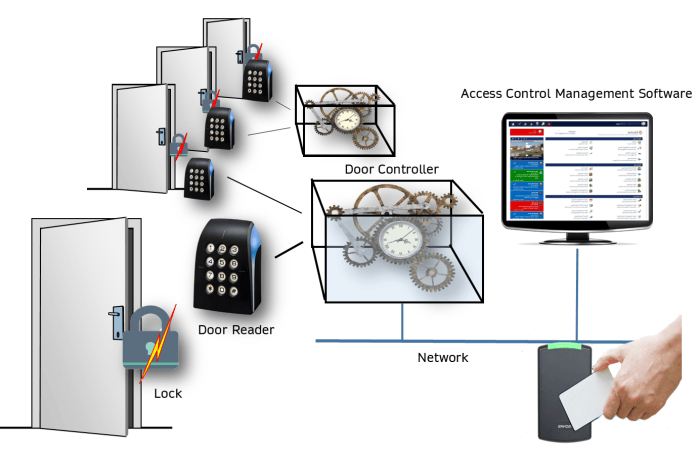
Source: kintronics.com
Navigating the invisible architecture of modern computing reveals a sophisticated world where every digital asset, file, and directory is heavily guarded by rigorous security protocols. At the very heart of this system lies an intricate web of digital permissions, functioning as a meticulous gatekeeper that determines who can touch, alter, or even view sensitive information. Imagine walking through a sprawling, high-security corporate archive where every single document cabinet, folder, and paper slip requires a specific key tailored precisely to the individual’s identity and clearance level.
An access control entry acts as a digital bouncer guarding critical system corridors with unwavering vigilance. Just as precision matters in security, navigating modern financial markets securely demands reliable investment compliance software to protect institutional assets. Ultimately, mastering this fine boundary through a precise access control entry empowers organizations to build a resilient and thriving future.
This digital reality relies on foundational components designed to protect data integrity across millions of concurrent interactions.
Individual security descriptors operate within modern operating systems as comprehensive data structures that permanently accompany objects like files, registry keys, and kernel primitives. When a process attempts to interact with an asset, the operating system inspects the security descriptor, which acts as a permanent passport office and guard detail combined into one immutable record. This structure primarily consists of a Discretionary Access Control List and a System Access Control List, alongside ownership metadata that dictates the primary trustee accountable for the resource.
Within these lists reside the specific directives known as access control entries, each functioning as an autonomous microscopic rulebook. These entries explicitly state whether a designated user or security group is granted or denied specific operational capabilities, such as reading, writing, executing, or changing permissions. As digital systems process billions of operations daily, these descriptors ensure that boundaries remain uncompromised, translating abstract human policies into concrete, mathematically enforceable boundaries within volatile memory and persistent storage volumes.
Anatomy of Security Identifiers and Access Masks
Comprehending how permissions cascade down a directory tree requires visualizing the precise blueprint of these security structures, where every single bit carries immense weight in determining digital access rights. The structural pairing of a unique trustee reference with a specific operational boundary creates a deterministic model that operating systems utilize to govern inheritance across complex file systems.
The following table illustrates the structural anatomy of permission inheritance, mapping out how security identifiers connect with access masks across hierarchical file structures.
| Structural Component | Data Definition | Inheritance Behavior |
|---|---|---|
| Security Identifier | A unique, immutable alphanumeric string representing a specific user, computer, or security group within the directory domain. | Propagates downward from parent containers to child objects unless explicitly blocked by inheritance-inhibiting flags. |
| Access Mask | A 32-bit binary layout where specific bit positions dictate precise permissions, such as generic read, write, and execute capabilities. | Inherited masks are recalculated dynamically based on propagation flags that determine whether sub-folders and files adopt the parent rights. |
| Control Flags | Metadata indicators defining the origin of the entry, specifying whether it was explicitly applied or inherited from a superior directory. | Directly instructs the file system filter driver on how subsequent child objects should process the overarching security descriptor. |
Kernel Evaluation of Privilege Tokens
System kernels maintain absolute vigilance by continuously evaluating incoming permission requests against the active security context held by a thread or process. When an application initiates a request to open a file handle, the executive layer extracts the user privilege token, which contains the complete list of security identifiers associated with the active user account and their respective group memberships.
The kernel then systematically traverses the target object’s access control list, comparing the tokens present in the request against every single access control entry encountered in sequential order. Explicit denials are processed prior to explicit allowances, ensuring that restrictive security policies immediately override permissive group assignments without exception. This rigorous evaluation occurs in a protected memory space, preventing malicious user-mode applications from tampering with the authorization flow and guaranteeing that every single system call satisfies strict authorization criteria before execution proceeds.
Historical Evolution of Discretionary Privilege Models
The architecture governing digital access rights evolved significantly from early multi-user workstation environments, where computational resources were strictly shared among localized terminal operators. In legacy operating systems, security models relied almost exclusively on coarse-grained owner-group-world paradigms, offering very limited flexibility for complex organizational hierarchies. Administrators faced severe limitations when attempting to assign distinct privileges to multiple distinct individuals without granting broad access to entire user categories.
As enterprise networks expanded and commercial demands necessitated granular data partitioning, computer scientists engineered discretionary privilege assignment models that introduced flexible access control lists. This breakthrough transformed early operating systems by allowing creators and administrators to tailor explicit permissions for arbitrary combinations of users and groups, laying the indispensable groundwork for the complex, enterprise-grade identity and access management frameworks utilized globally today.
Security is not a static destination but a continuous, disciplined practice of enforcing precise digital boundaries through immutable architectural rules.
Digital gatekeeping mechanisms rely heavily on what is an access control entry to maintain absolute fortress integrity.
In the digital realm, security is an ongoing narrative of resilience, where every single line of code acts as a vigilant sentinel guarding the gates of enterprise infrastructure. When millions of connection requests surge simultaneously toward a network perimeter, the underlying architecture faces a monumental test of endurance and precision.
Imagine a bustling metropolis during rush hour, where millions of commuters converge on the central transit hub at the exact same second. In the digital universe, this chaotic rush manifests as an authentication storm—a massive, sudden influx of login attempts, API calls, and data retrieval requests hammering network boundaries. During these high-stress events, network boundary defenses must interpret individual permission items embedded within every single request with lightning-fast accuracy.
Each incoming packet carries metadata that points directly to a specific access control entry, functioning like an encrypted digital passport stamped with precise clearance levels. Firewalls, intrusion detection systems, and edge routers do not merely glance at these credentials; they dissect them through rigorous multi-layered evaluations. The boundary engines cross-reference the incoming permissions against dynamic access control lists, checking whether the requesting entity holds the exact cryptographic proof required for entry.
If the system encounters ambiguous permissions or a sudden spike from an unverified IP address during the storm, it triggers immediate fallback protocols. This intricate balancing act ensures that legitimate traffic flows seamlessly while malicious or malformed packets are filtered out before they can ever touch core database servers. By parsing these permission items instantly, perimeter defenses prevent cascading system failures, ensuring that the digital fortress remains completely impenetrable even when battered by unprecedented volumes of concurrent connection demands.
Sequential filtering execution by firewall modules
Navigating the complex choreography of network traffic requires an unwavering, step-by-step evaluation process that leaves zero room for error or ambiguity. When a firewall module intercepts incoming data packets amid heavy traffic, it executes a precise sequential filtering process designed to scrutinize every access control entry without slowing down the overall system throughput.
The filtering pipeline begins at the outermost layer of the network interface, where incoming packets are captured and queued for immediate inspection. The inspection engine first strips away transport-layer headers to examine the source and destination IP addresses, matching them against preliminary blocklists and allowlists. Once the basic network parameters are verified, the module dives deeper into the application-layer payload to isolate the specific authorization tokens and user identity markers.
It reads the first entry in the rule base, evaluating it against the packet’s permission attributes in a strict top-to-bottom hierarchy. Should a match occur, the firewall applies the corresponding action—either permitting or denying the packet—instantly terminating further evaluation for that specific connection stream. If no match is found, the module proceeds to the next rule in the sequence, continuing this meticulous journey until a definitive security threshold is met or the default drop policy is enforced.
Execution of the security threshold mandates that any permission mismatch at the primary evaluation tier immediately triggers a secondary cryptographic audit, isolating the offending packet thread before it reaches internal routing tables.
This calculated progression guarantees that authorization decisions remain deterministic, predictable, and fully compliant with overarching corporate security policies, regardless of how intense the external traffic pressure becomes.
Administrative oversight for auditing rogue privilege alterations
Maintaining absolute control over sprawling cloud-native infrastructure requires constant vigilance, especially when automated provisioning scripts and rapid deployment cycles introduce opportunities for unauthorized privilege escalation. Security administrators must deploy sophisticated continuous monitoring tools to audit rogue privilege alterations across dynamic multi-cloud environments.
Cloud architectures inherently feature ephemeral resources, serverless functions, and microservices that spin up and down within seconds, creating a vast surface area for potential misconfigurations. Administrators rely on centralized security information and event management platforms to aggregate audit logs from every container cluster and identity provider. When a service account suddenly acquires administrative privileges outside of standard change management windows, automated anomaly detection algorithms flag the deviation.
Security teams then initiate forensic investigations by reviewing immutable audit trails that record the exact timestamp, initiating user, and API call responsible for the privilege shift. To illustrate this in real-world operational scenarios, consider enterprise cloud migrations where misconfigured storage buckets or overly permissive IAM roles have historically led to accidental data exposure. Modern oversight frameworks mitigate these risks by enforcing automated remediation scripts that instantly strip unauthorized access control entries the moment an anomalous privilege escalation is detected.
Furthermore, periodic access reviews and automated recertification campaigns ensure that human and machine identities retain only the minimal permissions necessary to perform their specific operational duties, closing security gaps before malicious actors can exploit them.
An access control entry acts as a digital gatekeeper, carefully checking every digital passport attempting to enter a secure zone. Imagine organizing chaotic digital pathways by utilizing a reliable link management platform to streamline traffic flow cleanly. Ultimately, mastering this precise security permission ensures only authorized visitors successfully reach their intended destination.
Comparison between traditional boundary fortifications and modern zero trust perimeters
The philosophy of digital defense has undergone a profound evolution, shifting away from rigid physical-style barriers toward fluid, highly granular verification models that assume breach at every layer of the network stack. Understanding this transformation requires a direct comparison between historical perimeter models and contemporary security architectures.
Traditional boundary fortifications operated much like a medieval castle, relying on a heavily guarded outer wall to protect everything residing inside the trusted internal network. Once a user or device successfully breached the perimeter firewall, they typically enjoyed unfettered lateral movement across internal systems. Modern zero-trust perimeter strategies completely dismantle this assumption of internal trust, mandating continuous, explicit verification for every single interaction regardless of the user’s location.
The following overview Artikels the core structural differences governing permission enforcement between these two distinct eras of cybersecurity design:
- Trust establishment relies strictly on network location in traditional models, whereas zero trust evaluates identity, device health, and behavioral context continuously.
- Permission granularity in legacy systems often applies broad strokes across entire subnets, while modern architectures enforce micro-segmentation down to individual access control entries per application request.
- Implicit trust zones dominate older perimeter designs, whereas zero trust enforces a strict policy of least privilege combined with continuous cryptographic validation.
- Incident containment in traditional networks is notoriously difficult once the outer wall falls, whereas zero trust isolates compromised endpoints instantly to prevent lateral movement.
By replacing static perimeter defenses with dynamic, context-aware permission enforcement, organizations drastically reduce their attack surface and build an inherently resilient digital infrastructure capable of withstanding sophisticated modern threat vectors.
Navigating the operational hierarchy surrounding what is an access control entry reveals intricate layers of authorization governance.

Source: sense-group.pro
Modern enterprise environments demand meticulous precision when defining digital boundaries and structural access pathways. Understanding these systems requires a look at how digital permissions cascade through complex corporate directory trees to protect vital assets.
An access control entry acts as a digital sentinel guarding critical security permissions within a network. Just as modern teams constantly optimize daily operations through when i work alternatives to boost productivity, administrators meticulously configure each specific access control entry to ensure absolute data protection and seamless digital workflow management.
Authorization governance relies on a structured flow of directives that dictate how security boundaries scale across large organizational units. Without a clear structural framework, managing millions of individual user interactions becomes an impossible administrative burden.
Cascading inheritance rules in directory structures
Cascading inheritance functions as the backbone of scalable enterprise security, ensuring that permissions assigned at a root level automatically flow downward to subordinate containers and objects. When an administrator establishes a baseline policy at the top of a directory tree, this directive propagates through every sub-folder and child object unless explicitly blocked. This mechanism drastically reduces operational overhead by eliminating the need to manually configure millions of individual file permissions.
The core principle governing this downward flow relies on parent-child relationships within hierarchical data stores, such as Active Directory or modern cloud-based identity providers. As objects are created within a container, they inherit the Access Control List entries of their immediate parent by default. However, this inheritance is not always absolute; system administrators can apply specific flags that dictate whether a permission can propagate further down the chain or apply only to the immediate container.
For instance, a permission might be flagged to apply to descendant files but not sub-folders, creating a granular security matrix.
Understanding these propagation vectors requires tracking how evaluation precedence handles conflicting rules. When a user attempts to access a deeply nested resource, the system aggregates explicit permissions assigned directly to the user object along with inherited permissions from every parent container in the path. Explicit permissions generally take precedence over inherited ones, allowing targeted exceptions within a broader governance framework.
This delicate balance ensures that broad organizational policies remain intact while accommodating necessary operational exceptions.
Comprehensive permission governance reference matrix
Navigating the vast landscape of digital authorization requires standardized reference points to classify how different security rules interact within a network. The following reference guide categorizes the primary components of directory permissions, inheritance flags, application scopes, and override behaviors.
| Permission Type | Inheritance Flag | Application Scope | Override Behavior |
|---|---|---|---|
| Full Control | Container and Subobjects | Enterprise Root to Leaf | Explicit deny takes precedence |
| Read and Execute | Subobjects Only | Targeted Department Folders | Parent inheritance blocked |
| Modify | This Object Only | Specific Configuration Files | Replaced by explicit allow |
| Write | Inherit Only | Future Descendant Objects | Propagation halted by explicit block |
Proper utilization of this reference matrix prevents common misconfigurations that often lead to security vulnerabilities in large-scale deployments. System architects rely on these standardized parameters to maintain compliance across diverse operating systems and cloud environments.
Administrative pitfalls in nested directory overrides
Overriding inherited permissions on deeply nested file system directories introduces significant administrative debt and security blind spots. When administrators break inheritance to grant unique access to a deeply buried sub-folder, they sever the automatic synchronization tied to broader organizational policies. Over time, these isolated exceptions accumulate, creating a fragmented security landscape often referred to as permission drift.
An access control entry acts as a digital bouncer guarding your network perimeter, much like understanding the lemonway business model strengths weaknesses reveals how strategic foundations drive secure enterprise growth. By evaluating these protective digital permissions with unwavering clarity, administrators ensure that every single access control entry maintains absolute fortress integrity.
Disrupting the natural flow of directory inheritance without a documented audit trail inevitably leads to unauthorized access loops and compliance failures during security audits.
Another critical hazard involves the compounding complexity of evaluating effective permissions when multiple overrides exist at different levels of the directory tree. Troubleshooting access issues becomes a forensic exercise rather than a routine administrative task, increasing Mean Time to Resolution for IT support teams. Furthermore, when employees transition roles or departments, manually managed overrides frequently remain active, violating the principle of least privilege and exposing sensitive corporate data to unnecessary risk.
Advanced methods for purging redundant security descriptors, What is an access control entry
Maintaining optimal database performance and security hygiene in heavily populated corporate directories requires proactive remediation strategies to eliminate stale access control entries. Over years of mergers, acquisitions, and organic staff turnover, directory databases accumulate orphaned security identifiers and redundant authorization rules that bloat storage and slow down authorization checks. Advanced administrators deploy automated scripting routines and directory auditing utilities to scan deep object hierarchies, identifying and safely removing unreferenced access control entries without impacting active workflows.
Enterprise database optimization relies on several proven techniques to streamline authorization overhead:
- Executing scheduled graph analysis queries to detect circular inheritance paths and broken parent-child trust relationships across multi-domain forests.
- Deploying automated remediation scripts that cross-reference active directory user accounts against human resources databases to purge orphaned security descriptors tied to terminated employees.
- Consolidating redundant explicit permissions back into standard inherited templates to reduce the overall size of the access control list on heavily trafficked file servers.
- Implementing regular baseline comparisons to flag unauthorized modifications to root-level security policies before they propagate downward through the directory tree.
- Utilizing specialized database compaction tools to reclaim storage space within directory partitions following large-scale permission cleanups.
Visualizing digital ledger security inspections
Envision a sprawling, cathedral-like archive stretching endlessly into the digital horizon, housing millions of towering shelves filled with glowing ledgers of corporate data. In this vast repository of knowledge, diligent security guards stand at every junction, wearing polished badges that signify their authority to verify identity and intent. Every time a worker approaches a secure vault containing sensitive financial records, a guard steps forward to inspect the individual’s credential tag, checking the intricate holographic seals stamped upon it by upper management.
The inspection process is both swift and uncompromising, mirroring the precise evaluation logic of modern operating systems processing access requests. If the credential tag bears the correct hierarchical signature passed down from the central archives, the heavy digital gate swings open smoothly, granting passage into the designated aisle. Should the tag lack the required authorization stamps, or if an administrator has placed a temporary seal of restriction upon that specific section of the vault, the gate remains firmly locked, and a secure log entry records the denied attempt.
This grand architectural ballet of inspection and authorization repeats millions of times a day, ensuring absolute protection for the organization’s most critical digital assets.
System administrators frequently encounter complex troubleshooting scenarios involving what is an access control entry during security audits.
When the digital machinery of an enterprise suddenly grinds to a halt because a vital background process hits a brick wall, the fallout can feel akin to an emergency room crisis. Technicians step into a high-pressure environment where every second of downtime translates to lost productivity and frustrated stakeholders. Navigating these labyrinthine permission structures requires a blend of methodical precision and real-time forensic investigation to trace the exact moment an access authorization fails.
Diagnostic procedures begin the moment an unexpected permission denial disrupts a critical background operation, often manifesting as opaque error codes deep within system logs. Technicians immediately deploy specialized tracing tools to capture the exact system calls made by the failing process, illuminating the precise moment the security subsystem rejects the request. By dissecting the security identifier associated with the service account and comparing it against the target resource’s discretionary access control list, specialists can pinpoint discrepancies.
Visualizing this process is akin to watching a master locksmith examine the microscopic wear patterns on a tumbler to understand why a key refuses to turn. Advanced telemetry feeds stream live events into monitoring dashboards, allowing engineers to isolate whether the blockage stems from inherited permission overrides, explicit explicit denials, or corrupted directory service attributes.
Diagnostic Protocol For Directory Service Privilege Flags
Isolating corrupted privilege flags within a malfunctioning directory service demands a strict adherence to structured troubleshooting methodologies to prevent cascading authentication failures across the enterprise network. Technicians must execute a series of targeted validations to restore structural integrity without compromising the broader security posture.
- Verify the replication status across all domain controllers to ensure permission discrepancies are not merely localized synchronization delays.
- Query the specific object using authoritative command-line utilities to inspect the raw binary structure of the security descriptor.
- Compare the attribute values against a known healthy baseline backup to detect anomalous permission bit flips.
- Review event viewer logs for directory service access failures corresponding to the exact timestamp of the service interruption.
Cryptographic Verification Methods For Security Descriptors
Ensuring that security descriptors have not been maliciously altered or silently corrupted requires robust cryptographic verification techniques that act as an unyielding digital notary. Administrators rely on hashing algorithms and digital signatures embedded within the directory database to validate the authenticity of every access control entry. When a security descriptor is written, a cryptographic checksum is generated and bound to the object metadata.
If unauthorized actors attempt to elevate privileges by tampering with the binary access lists, the resulting hash mismatch immediately triggers high-priority security alerts. This cryptographic tether guarantees that even sophisticated tampering attempts leave an unmistakable mathematical fingerprint within the audit trails.
Cryptographic validation transforms silent privilege escalations into loud, verifiable anomalies by mathematically binding authorization lists to immutable system hashes.
Cluster Wide Permission Synchronization Workflows
Restoring corrupted permission lists across distributed server clusters while maintaining uninterrupted operational uptime represents one of the most delicate challenges in modern systems engineering. Technicians implement phased remediation workflows that surgically update access control lists node by node, avoiding the catastrophic impact of a global service restart. The procedure begins by isolating a single cluster node from the active load balancer, effectively shielding live traffic from ongoing diagnostic adjustments.
Once isolated, administrators apply targeted permission repairs using transactional scripting interfaces that ensure atomicity either the entire privilege list updates cleanly or the system rolls back to the previous stable state automatically. After rigorous local validation, the node is reintroduced to the cluster, and the process repeats iteratively across the remaining infrastructure until harmony is fully restored across the distributed environment.
Future developments in security architecture continue to reshape how what is an access control entry functions in decentralized environments.
The landscape of modern cybersecurity is experiencing a seismic shift as perimeter defenses dissolve into borderless, cloud-native ecosystems. Innovations in cryptography, decentralized networking, and distributed computing demand a radical re-imagining of how digital permissions are granted, verified, and audited across complex infrastructures. As organizations scale globally, traditional authorization models struggle to keep pace with the fluid dynamics of modern digital interactions.
Navigating this evolution requires a deep understanding of emerging paradigms that promise to redefine the very nature of trust and data protection in the digital age.
Security architects are currently tasked with engineering frameworks that remain resilient against both sophisticated cyber threats and the inherent vulnerabilities of legacy systems. By blending advanced mathematical constructs with agile software design, the industry is moving toward autonomous protection mechanisms capable of self-healing and real-time adaptation. This transition highlights the critical importance of modernizing foundational authorization elements to support the demands of tomorrow’s interconnected enterprise networks.
Evolution of decentralized permission topologies
Distributed ledger technology offers a revolutionary pathway to overhaul traditional hierarchical permission models by anchoring authorization data within immutable, consensus-driven networks. Historically, access rights have been managed by centralized authorities, creating single points of failure and administrative bottlenecks that hinder organizational agility. In contrast, a ledger-based approach disperses the validation mechanism across a network of independent nodes, ensuring that no single entity holds absolute control over permission states.
When a user requests entry to a restricted resource, the validation query interacts with a smart contract deployed on the blockchain. This smart contract executes predefined logic transparently, validating the credentials against a globally synchronized state before granting access. Because every transaction is cryptographically hashed and chained to the preceding record, tampering with permission histories becomes virtually impossible without widespread network collusion.
Real-world implementations in supply chain networks, such as IBM Food Trust, demonstrate how distributed authorization prevents unauthorized data manipulation while maintaining seamless multi-party collaboration. Furthermore, consensus-driven networks eliminate the latency associated with centralized directory synchronization, allowing global enterprises to propagate permission updates instantly and reliably across disparate geographic regions.
To clearly illustrate the paradigm shift happening across modern security infrastructures, the following comparative analysis highlights the operational differences between legacy discretionary models and upcoming autonomous adaptive authorization frameworks:
| Operational Metric | Legacy Discretionary Models | Autonomous Adaptive Frameworks |
|---|---|---|
| Control Mechanism | Centralized administrative servers and static access control lists. | Decentralized smart contracts and consensus-driven ledgers. |
| Adaptability | Reactive updates requiring manual intervention by system administrators. | Real-time contextual adjustments driven by machine learning algorithms. |
| Auditability | Vulnerable to log tampering and fragmented administrative oversight. | Cryptographically immutable audit trails stored across distributed nodes. |
| Scalability | Prone to performance bottlenecks in sprawling multi-cloud environments. | Optimized for edge computing and trustless cross-domain interactions. |
Architectural challenges within serverless microservices
Integrating granular permission logic into serverless microservice architectures introduces complex engineering hurdles due to the ephemeral and distributed nature of modern application design. Developers must carefully balance the need for rigorous security checks with the performance demands of ultra-fast execution environments where traditional session states are absent. In a serverless paradigm, functions spin up and down dynamically to handle incoming traffic, leaving little room for heavy authorization middleware that could introduce latency.
Consequently, engineering teams frequently struggle with maintaining consistent permission policies across hundreds of independent functions without centralizing bottlenecks. One prominent integration challenge involves propagating security context through asynchronous event-driven pipelines, where the original user identity can easily become detached from the operational payload. To mitigate this, developers rely on stateless cryptographic tokens, such as JSON Web Tokens, embedded directly into the invocation payload.
However, validating these tokens at every microservice hop can degrade application performance, forcing architects to implement distributed caching mechanisms that introduce their own synchronization complexities. Visualizing this environment reveals a vast, pulsing constellation of micro-functions, each independently evaluating cryptographic proofs in milliseconds, operating within a delicate balance of speed and strict boundary enforcement.
To overcome these architectural hurdles, modern development pipelines incorporate rigorous deployment patterns that ensure authorization logic scales harmoniously alongside application code. These strategies typically focus on decentralizing policy enforcement while maintaining centralized policy management to preserve administrative oversight.
- Deploying sidecar proxies to intercept incoming requests and offload permission validation from the core business logic.
- Utilizing policy-as-code tools to automatically test access control configurations during the continuous integration and continuous deployment cycle.
- Implementing ephemeral key rotation policies to minimize the blast radius of compromised service-to-service credentials.
- Enabling localized caching of validated authorization decisions to reduce the latency overhead associated with remote identity providers.
Cryptographic implications of quantum computing advancements
The rapid progression of quantum computing poses a profound existential threat to the mathematical foundations of contemporary digital security identifiers and permission verification systems. Current cryptographic protocols, such as RSA and Elliptic-Curve Cryptography, rely on complex mathematical problems that are computationally infeasible for classical computers to solve within a reasonable timeframe. However, quantum algorithms designed for sufficiently powerful quantum machines can effortlessly factor large prime numbers and solve discrete logarithms, effectively rendering standard digital signatures obsolete.
If the underlying cryptographic integrity of security tokens and access credentials is compromised, malicious actors could forge valid authorization entries with impunity, bypassing all perimeter and behavioral defenses. This looming technological milestone requires proactive migration strategies toward quantum-resistant cryptographic algorithms that leverage lattice-based cryptography or multivariate polynomial equations. Financial institutions and government agencies are already participating in standardization initiatives led by organizations like the National Institute of Standards and Technology to future-proof their digital assets.
Quantum resilience is no longer a distant theoretical concern; it is an immediate architectural imperative that dictates the long-term viability of decentralized digital trust.
As the timeline for commercially viable quantum computers accelerates, organizations must conduct comprehensive cryptographic inventories to identify vulnerable security identifiers embedded within legacy and cloud-native applications. Transitioning to post-quantum standards involves upgrading software libraries, updating hardware security modules, and ensuring backward compatibility during the lengthy migration phase. Neglecting this transition risks catastrophic systemic failures where the fundamental mechanisms guaranteeing digital permissions could be systematically dismantled by quantum-enabled adversaries.
Conclusive Thoughts

Source: omnilert.com
As we gaze toward the horizon of decentralized networks and quantum computing advancements, the philosophy of digital gatekeeping continues to evolve with breathtaking momentum. By mastering the intricate mechanics of hierarchical permissions and embracing autonomous adaptive frameworks, security professionals everywhere are actively shaping a safer, more transparent digital tomorrow. Every correctly configured security descriptor and every resolved audit challenge brings us one step closer to a harmonious digital ecosystem where innovation flourishes safely under the watchful eye of robust authorization governance.
