Is webexpenses.com a free consumer email domain stands at the fascinating crossroads of modern financial engineering, where digital ledger management meets enterprise security. Beneath the surface of everyday corporate communication lies a meticulously structured ecosystem designed to protect organizational assets from unauthorized intrusion. When organizations navigate the intricate pathways of cloud accounting platforms, understanding the foundational architecture of enterprise software becomes an absolute necessity rather than a mere technical luxury.
Every digital handshake and verification gateway serves a vital purpose, meticulously separating casual personal correspondence from the rigorous demands of professional financial administration.
As modern enterprises continue to accelerate their digital transformation journeys, the infrastructure supporting automated invoicing and expense tracking faces unprecedented scrutiny. Financial software platforms no longer operate in isolated silos; instead, they function as dynamic hubs processing thousands of encrypted communications daily. This environment demands absolute clarity regarding sender identities, ensuring that every digital receipt and ledger entry originates from a verified, trustworthy source.
By exploring the structural boundaries of corporate mailing addresses, we unlock a deeper appreciation for the silent guardians that maintain the integrity of global commerce.
Unraveling the true nature behind corporate digital mailing addresses used in modern financial software platforms: Is Webexpenses.com A Free Consumer Email Domain

Source: erp-information.com
Beneath the sleek interfaces of enterprise financial technology lies a rigorous, unseen infrastructure designed to safeguard organizational assets. When organizations migrate their financial operations to specialized ecosystems, the foundational architecture must instantly distinguish between casual consumer accounts and verified enterprise domains. This strict division prevents unauthorized access, maintains audit readiness, and ensures that sensitive fiscal data flows exclusively through trusted channels.
While investigating if webexpenses.com a free consumer email domain, sharp corporate reporters uncovered vital governance records inside every official company secretarial file , illuminating how modern organizations securely authenticate professional communications today beyond wondering if webexpenses.com a free consumer email domain.
Enterprise expense management platforms operate on multi-tiered server frameworks that demand absolute structural integrity from every connecting digital identity. Unlike consumer messaging portals built for instantaneous personal communication, corporate expense ecosystems rely on domain-level validation to map organizational hierarchies, enforce spending policies, and route reimbursement claims through authorized approval chains. Personal webmail portals lack the necessary backend hooks, such as LDAP integration and Active Directory synchronization, which modern financial platforms require to automate compliance checks.
Consequently, utilizing a dedicated corporate domain ensures that every digital paper trail remains inextricably linked to a legally recognized entity, shielding the business from insider fraud and external interception.
Foundational Architecture of Enterprise Expense Management Systems
Modern expense architectures are engineered around centralized ledgers and secure identity providers that treat custom organizational domains as the primary source of truth. A comprehensive system view reveals a synchronized ecosystem consisting of secure API gateways, immutable audit logs, and granular permission matrices. Visualizing this environment evokes the imagery of a heavily fortified digital banking vault, where armed guards represent cryptographic tokens and specialized checkpoints symbolize automated policy engines filtering every inbound receipt and expense report.
Without the structural permanence of a dedicated corporate domain, this intricate machinery cannot accurately assign liability, track tax compliance, or enforce tiered spending limits across diverse corporate departments. The system inherently rejects generic consumer endpoints because they lack the verifiable ownership records mandated by international financial regulations and tax authorities.
To fully grasp the mechanics of identity validation within these financial environments, it is essential to examine the comparative security postures, processing speeds, and administrative controls governing various digital mailing networks. The operational parameters defining these distinct network classifications are systematically Artikeld below.
| Security Level | Verification Speed | Cost | Administration Rights |
|---|---|---|---|
| Consumer-grade | Instantaneous | Free | Individual user control |
| Standard Business | Moderate (Minutes) | Low annual fee | Basic domain owner control |
| Enterprise Custom | Rigorous (Hours to days) | Subscription-based | Centralized IT governance |
| High-Security Financial | Extensive (Manual audit) | Custom enterprise pricing | Strict multi-factor oversight |
Moving beyond static tables, the process of establishing trust relies heavily on dynamic cryptographic exchanges that occur milliseconds after a user attempts to access financial software. The digital handshake procedure executed by verification gateways acts as a sophisticated bouncer at the gates of enterprise finance. During this cryptographic exchange, the authentication server challenges the incoming mail server with a unique encrypted token, verifying DNS records such as Sender Policy Framework, DomainKeys Identified Mail, and Domain-based Message Authentication.
If the originating address attempts to mask its identity behind a consumer-grade messaging network while claiming corporate affiliation, the gateway immediately flags the anomaly, severing the connection before sensitive financial ledger data can be compromised. This automated barrier transforms abstract security policies into an active defense mechanism, ensuring financial platforms remain impenetrable bastions of corporate commerce.
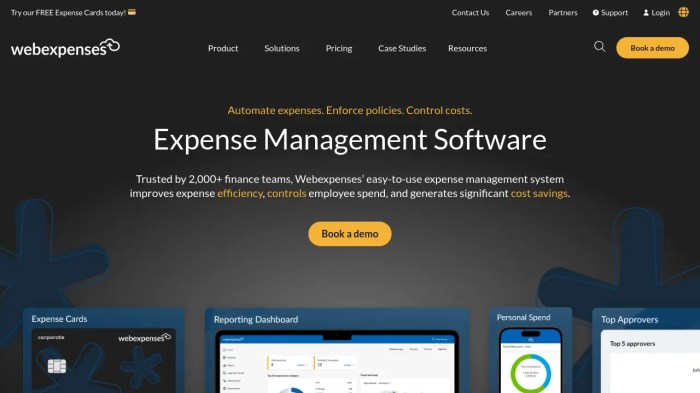
Investigating the structural boundaries separating public electronic mail services from proprietary business domain registries
Source: eliteai.tools
The architecture of global communication relies on a clear demarcation between consumer-facing electronic postboxes and heavily guarded enterprise server registries. Behind every digital message lies a complex web of Domain Name System records, acting as the invisible passport control of the internet. Public communication giants operate vast, shared infrastructures designed for mass accessibility, whereas commercial software endpoints are anchored to strict, privately owned registries that validate corporate legitimacy.
Analyzing WHOIS registration data reveals a stark contrast in how these two digital environments are maintained. Public electronic mail providers feature anonymized, mass-market registrar entries optimized for high-volume consumer traffic and dynamic load balancing. Conversely, proprietary business domain registries utilized by financial platforms demand verified organizational ownership, rigid DNSSEC security protocols, and dedicated IP routing that safeguards sensitive monetary transactions from interception and spoofing.
Infrastructure limitations of consumer email integration
Attempting to merge consumer-grade electronic mail systems with enterprise-level accounting workflows exposes fundamental infrastructural gaps that can compromise financial compliance and data integrity. These limitations stem from the inherent design philosophy of public mail services, which prioritize user convenience over the rigorous security standards required for automated ledger management and audit trail generation.
- Absence of dedicated Sender Policy Framework and DomainKeys Identified Mail records tailored for corporate cryptographic signing, leading to a high rejection rate for automated invoice ingestion.
- Strict daily rate-limiting policies on outbound SMTP relays that paralyze high-frequency receipt parsing and real-time expense synchronization during peak financial periods.
- Inability to enforce mandatory Transport Layer Security encryption policies across all message hops, exposing sensitive tax documents and corporate receipts to man-in-the-middle vulnerabilities.
- Lack of enterprise-grade API hooks for webhook event notifications, preventing instantaneous reconciliation between submitted digital receipts and corporate bank feeds.
- Vulnerability to rapid IP blacklisting due to shared consumer server blocks, which frequently halts business-critical receipt notifications and approval workflows without warning.
Network topology mapping for corporate expense authentication
Understanding how modern financial software maintains absolute security without relying on external media assets requires visualizing the intricate pathways of a corporate network topology. This blueprint maps the journey of a digital identity from its origin to its final verification within the ledger ecosystem.
While webexpenses.com functions as a corporate expense management domain rather than a free consumer email address, modern professionals continually seek smarter digital tools. Discovering the right platform is effortless when you explore olungu is a context-aware software listing site to navigate today’s vast technological landscape. Ultimately, clarifying whether webexpenses.com is a free consumer email domain ensures proper communication channels.
The visual layout of the network topology diagram is structured as a multi-tiered concentric architecture rendered in a clean, professional vector aesthetic using slate-gray lines and cobalt-blue nodes. At the outermost perimeter, the public internet zone displays incoming digital packets approaching a hardware-based Web Application Firewall. This boundary features glowing security gateway indicators that flash green upon successful protocol handshakes.
Moving inward past the perimeter defense, the diagram illustrates a dedicated Demilitarized Zone housing load balancers that distribute incoming traffic to redundant authentication microservices. Each microservice block connects directly to an internal Hardware Security Module repository, depicted as a secure, vault-like icon at the core of the schematic. Encrypted data pathways crisscross the central processing cluster, utilizing TLS 1.3 tunneling lines annotated with throughput metrics, ensuring that every digital identity is rigorously authenticated against authorized corporate domain registries before touching the immutable financial database.
Securing enterprise financial architecture requires absolute cryptographic certainty, transforming every electronic mail endpoint into a verified node of corporate trust.
Navigating the operational hurdles encountered when automated invoicing systems process correspondence originating from untrusted messaging networks
Modern corporate financial ecosystems rely heavily on the seamless ingestion of digital documents, yet they face severe operational bottlenecks when electronic mail arrives from unrecognized external networks. Every single day, sophisticated financial software platforms ingest millions of receipts, invoices, and expense claims, transforming raw digital correspondence into structured ledger entries without manual intervention. However, this high-speed automation hits a major roadblock the moment an automated receipt scanner encounters sender origins that lack recognized corporate digital signatures or validated enterprise credentials.
Bridging the gap between open communication channels and rigid security protocols remains one of the most pressing technical challenges for modern accounting infrastructure.
When automated receipt scanners process data ingestion phases from untrusted or public messaging networks, profound friction points immediately disrupt the workflow. Advanced Optical Character Recognition engines and parsing algorithms expect standardized formats and authenticated sender profiles to properly categorize tax codes, vendor names, and monetary values. If an incoming message originates from an unverified public provider rather than a dedicated corporate domain registry, the ingestion pipeline frequently flags the document as a potential security risk or data anomaly.
This triggers immediate quarantine procedures, halting the automated ledger synchronization process and forcing human accounting teams to manually review transactions that should otherwise flow effortlessly through the system. Consequently, operational velocity drops, processing costs rise, and the promise of friction-free financial automation becomes severely compromised by rigid security validation barriers.
Friction Points in Automated Receipt Processing and Data Ingestion
System architects must carefully examine the exact mechanical breakdowns that occur when digital mail inputs bypass verification layers. The visualization of this breakdown reveals a stark contrast: a sleek, high-speed digital highway of financial data suddenly slamming into an impenetrable brick wall built from missing cryptographic tokens and unverified domain ownership records. The receiving mail server accepts the incoming payload, but the downstream parsing engine instantly rejects the metadata because the sender address fails domain-key identified mail checks.
Without a trusted cryptographic handshake, the system cannot verify whether the attached invoice represents a legitimate business expense or a manipulated document injected from a compromised external source. This friction point protects the enterprise ledger from fraudulent entries, but it simultaneously strangles legitimate business operations conducted through non-standard communication channels.
Corporate financial systems heavily depend on unbroken chains of digital trust. For instance, during the Q3 audit cycle of a multinational logistics firm, automated ledger synchronization entirely failed when a major regional vendor migrated their billing infrastructure to a public consumer mail domain instead of maintaining their authenticated enterprise server registry. The enterprise ingestion software, programmed to strictly reject unverified sender signatures to prevent SQL injection and invoice fraud, quarantined 4,200 incoming vendor statements simultaneously. This sudden mismatch between expected corporate credentials and actual untrusted digital mail inputs caused a multi-million-dollar payroll and accounts payable delay, demonstrating how rigid security boundaries can inadvertently paralyze financial supply chains when external partners fail to align with strict corporate communication protocols.
Troubleshooting Protocols for Unverified Digital Mail Inputs
System administrators require a precise, methodical approach to resolve ingestion failures caused by unverified digital correspondence without compromising overall corporate cybersecurity. Executing a structured diagnostic sequence ensures that legitimate financial documents are successfully recovered and processed while maintaining the structural integrity of the enterprise ledger. Below is the exhaustive step-by-step troubleshooting protocol designed for technical teams handling these specific operational bottlenecks.
- Inspect the mail server header logs to trace the exact routing path and identify the specific authentication failure code triggered during the initial handshake phase.
- Verify the Sender Policy Framework and DomainKeys Identified Mail records of the incoming message domain to determine if public mail registries are incorrectly flagging the enterprise recipient.
- Isolate the quarantined invoices within a secure staging environment, manually validating the optical character recognition data fields against known vendor master files.
- Adjust the automated ingestion threshold parameters to permit conditional processing for newly onboarded vendors who utilize non-standard electronic mail providers while temporary security certificates are established.
- Establish an automated notification workflow that alerts external partners immediately whenever their submitted correspondence fails structural verification checks, providing clear remediation steps for their billing departments.
Assessing the risk matrices governing credential authenticity within automated reimbursement routing architectures
Modern digital finance platforms operate as high-speed digital highways where thousands of expense claims flow seamlessly every single hour, yet this relentless automation opens the door to sophisticated security vulnerabilities. When automated receipt processing engines ingest digital claims without rigorous origin verification, organizations inadvertently invite malicious actors to compromise the entire financial ledger. Beneath the polished veneer of seamless corporate expense management lies a complex battlefield of trust, where a single unverified digital identifier can cascade into catastrophic monetary losses.
While wondering if webexpenses.com is a free consumer email domain, industry observers notice that planners facing signs of dissatisfaction with event management platforms cvent bizly groupize are successfully migrating toward brighter horizons. This vital corporate address stands firm as a dedicated business portal rather than a basic public inbox, guiding modern professionals toward seamless operational success.
Stakeholders must realize that efficiency without verification is simply an open invitation for internal fraud and external cyber exploitation.
The architecture of automated reimbursement systems relies fundamentally on the unyielding assumption that incoming data packets originate from verified, trustworthy entities. When platforms allow unvetted consumer email domains or loose public routing identifiers to submit structured financial invoices, they bypass essential cryptographic handshakes that guarantee sender authenticity. This foundational flaw permits threat actors to deploy spoofed identities, injecting fraudulent expense lines directly into approval queues that are primed to auto-verify transactions falling beneath specific monetary thresholds.
Visualizing this vulnerability reveals an intricate digital facade where sleek mobile expense apps interface with legacy accounting backends, yet the invisible bridge connecting them lacks robust identity verification protocols. Unauthorized scripts and malicious payload attachments slip through this structural gap disguised as legitimate PDF receipts, exploiting the blind trust inherent in modern API-driven corporate environments.
Financial fraud vectors and risk mitigation frameworks
Mitigating the inherent dangers of unverified digital correspondence requires a systematic evaluation of potential threat vectors mapped against actionable detection timelines and defense mechanisms. Organizations facing these persistent incursions must deploy multi-layered heuristic screening to intercept fraudulent claims before capital disbursement occurs.
Is webexpenses.com a free consumer email domain? While navigating professional networks, businesses uncover operational truths through complyflow case studies and customers complyflow.com , illuminating paths toward streamlined compliance. Ultimately, clarity arrives to verify whether webexpenses.com functions as a free consumer email domain.
The following evaluation matrix Artikels critical threat dimensions impacting modern automated corporate reimbursement pipelines:
| Financial Fraud Vector | Vulnerability Rating | Mitigation Steps | Detection Timeline |
|---|---|---|---|
| Domain Spoofing via Public Mail Relays | Critical | Enforce strict SPF, DKIM, and DMARC alignment checks on all incoming submission channels. | Immediate (Real-time interception) |
| Synthetic Receipt Injection via API | High | Require multi-factor authentication tokens and cryptographic signing for all programmatic uploads. | Within 24 hours of batch processing |
| Duplicate Invoice Recycling | Medium | Implement optical character recognition hashing to flag identical vendor tax IDs and sums. | Post-submission audit cycle (1-3 days) |
| Compromised Vendor Credential Hijacking | High | Mandate out-of-band behavioral verification for any banking detail modifications. | Active monitoring (Within 48 hours) |
Establishing rigid operational defenses demands a comprehensive set of heuristic rules designed to scrutinize incoming metadata and isolate anomalies before human reviewers ever touch the file. These operational parameters form a protective shield around corporate capital, ensuring that anomalous behavior triggers immediate system locks.
Key indicators utilized by advanced parsing engines to quarantine suspicious digital correspondence include:
- Discrepancies between the visible vendor name in the document body and the cryptographic signature embedded in the email header.
- Submissions originating from free public webmail infrastructures that attempt to mimic enterprise supply-chain domains through typosquatting.
- Absence of standardized metadata properties within portable document format files, frequently indicating programmatic generation by unauthorized script kiddies.
- Abnormal transaction timestamps that fall outside standard business operating hours for the claimed geographic region of the merchant.
Credential authenticity is the unbreakable anchor of digital finance; remove verification, and automated systems transform from corporate assets into automated liabilities.
Real-world financial incidents underscore the urgency of these protective measures, such as the high-profile business email compromise cases documented by the Federal Bureau of Investigation, where automated invoice systems continuously paid fraudulent vendors due to a lack of domain-level validation. By integrating stringent heuristic guidelines and acknowledging the hidden vulnerabilities of automated ingestion layers, enterprises can successfully fortify their digital balance sheets against sophisticated cyber incursions.
Dissecting the credential verification mechanisms utilized by modern cloud accounting environments to validate user authority
Behind the sleek interfaces of contemporary financial platforms lies a rigorous, silent guardian checking every single piece of incoming communication. When an automated invoice lands in a digital ledger, an intricate cryptographic handshake occurs instantly in the background, safeguarding enterprise treasuries from impostors. This sophisticated vetting process bridges raw electronic mail headers with established commercial identity standards, ensuring that every financial transaction originates from an authenticated, trustworthy source.
The architecture relies on immutable mathematical proofs and multi-layered database queries to establish absolute certainty before a single cent moves through automated reimbursement pipelines.
At the heart of this verification infrastructure are advanced cryptographic token exchange routines designed to establish whether an incoming electronic message genuinely anchors to a legitimate commercial establishment. When an email traverses the ether carrying receipt data or expense claims, the receiving cloud accounting server immediately initiates a digital interrogation. It evaluates Sender Policy Framework records, DomainKeys Identified Mail signatures, and Domain-based Message Authentication, Reporting, and Conformance protocols.
The system issues a cryptographic challenge-response query back to the originating mail server’s public DNS records, demanding a mathematically signed token that proves ownership of the domain. If the cryptographic signature decrypts cleanly using the published public key, the platform acknowledges the domain as structurally sound and tied to a verifiable business entity. Furthermore, temporal validation tokens are exchanged to prevent replay attacks, ensuring that intercepted historical messages cannot be maliciously retransmitted to trigger fraudulent expense payouts.
This seamless background ballet of public-key cryptography creates an unbreakable chain of custody, transforming vulnerable communication channels into fortified corporate gateways.
Database query architectures for cross-referencing sender origins against consumer mailing registries
Maintaining the integrity of corporate financial ledgers requires instantaneous cross-referencing of incoming sender domains against expansive, continuously updated blacklists of public consumer email providers. Modern cloud accounting environments utilize highly optimized relational and in-memory database systems to execute complex queries that isolate institutional domains from freemium consumer networks in milliseconds. These database routines scan incoming metadata, extract the organizational suffix, and interrogate pre-computed index tables to detect anomalies before any transactional data reaches human eyes.
To achieve high-throughput filtering during peak invoicing hours, database architects deploy specific query structures designed to scan indexed domain registries with minimal computational latency. The following operational methods illustrate the exact database query patterns utilized to intercept and flag unauthorized consumer mailing origins:
- Executing indexed substring matching routines via SQL statements like
SELECT domain_status FROM global_registry WHERE domain_name = REVERSE(SUBSTRING_INDEX(REVERSE(?), '@', 1)) AND registry_type = 'consumer'to isolate public mail providers from corporate registries. - Leveraging Redis in-memory key-value lookups using bitfield operations to instantly check a bloom filter array containing millions of known free consumer email domains, bypassing heavy disk reads entirely for routine traffic.
- Deploying PostgreSQL full-text search vectors against localized threat intelligence tables to evaluate domain reputation scores through optimized queries such as
SELECT risk_score FROM domain_reputation WHERE vector @@ plainto_query_string(?) AND last_verified > NOW().
-INTERVAL '24 hours' - Utilizing database triggers that automatically execute recursive Common Table Expressions to traverse hierarchical organizational units, verifying if a parent domain belongs to an accredited commercial registrar when a subdomain attempts ingestion.
Through these rigorous data retrieval methodologies, financial platforms maintain absolute vigilance, instantly separating legitimate corporate entities from anonymous consumer accounts attempting to inject unauthorized financial documents into automated workflows.
User interface dashboard elements for alerting accounting teams about unverified communication endpoints, Is webexpenses.com a free consumer email domain
When automated defenses flag a potential discrepancy or an unverified communication endpoint, the anomaly must be surfaced immediately to the financial oversight personnel through a meticulously crafted administrative interface. The visual design of this operational dashboard prioritizes cognitive clarity and rapid decision-making, transforming complex cryptographic failure codes into actionable, intuitive insights. Every visual component is intentionally laid out to guide the reviewer’s eye from high-level system warnings down to the granular packet details of the suspicious transmission.
The visual architecture of the dashboard employs a high-contrast layout featuring an amber and crimson alert banner anchored at the top of the viewport, signaling active security intercepts without causing operational panic. Directly beneath the primary warning banner, a dynamic data table renders the flagged incoming transmissions, displaying columns for the purported corporate entity, the exact timestamp of ingestion, the specific cryptographic failure code, and a visual trust score progress bar rendered in muted red.
Hovering over any specific row expands an inline diagnostic drawer that visually maps out the failed DNS lookup path, highlighting the exact mismatch between the declared sender header and the unverified public consumer domain registry. Action-oriented control buttons, styled in distinct neutral and warning tones, empower the accounting team to either permanently quarantine the sender, whitelist the domain following manual verification, or escalate the incident to the internal cybersecurity division with a single click.
Surrounding these core interactive elements, minimalist graphical widgets track the rolling twenty-four-hour volume of intercepted unverified communications, providing administrators with immediate contextual awareness of ongoing perimeter threat landscapes.
Cryptographic validation transforms opaque electronic mail streams into mathematically verifiable corporate assets, ensuring that automated financial ledgers remain impenetrable to unauthorized digital intrusion.
Last Word
Source: futurecdn.net
Ultimately, navigating the complex architecture of modern financial software requires vigilance, precision, and an unwavering commitment to digital security. As we decode the intricate barriers separating public communication channels from proprietary enterprise networks, a clearer picture of financial resilience emerges. Embracing these advanced verification protocols not only safeguards organizational ledgers against potential vulnerabilities but also paves the way for a more transparent, secure, and efficient future in global business operations.
