barracuda email gateway defense stands as a formidable digital shield in an era where modern enterprises face an unrelenting wave of sophisticated cyber threats. Every single day, invisible digital shadows slip past traditional security walls, exploiting zero-day vulnerabilities and manipulating human trust through carefully crafted social engineering ploys that ordinary filters simply cannot recognize.
Behind the glossy glass screens of our corporate devices, dedicated security teams are fighting a silent, high-stakes battle to intercept malicious payloads before they contaminate the corporate heartbeat. By harnessing the profound intelligence of cloud-native architecture, organizations can finally transition from reactive victims to proactive guardians, illuminating dark operational blind spots and establishing a resilient framework where innovation and robust protection seamlessly coexist.
Organizations often struggle to intercept sophisticated phishing campaigns before they reach corporate inboxes.: Barracuda Email Gateway Defense

Source: insight.com
Modern digital communication landscapes hum with constant, invisible friction as security teams race against an escalating tide of deception. In the digital corridors of global enterprises, a silent battle unfolds daily where adversaries deploy psychological manipulation masked as routine correspondence. Cybersecurity professionals find themselves constantly outpaced because traditional defenses were forged in an era of static threats and predictable signatures.
When an executive opens what appears to be a legitimate urgent invoice from a trusted vendor, the trap has already snapped shut, revealing the devastating gap between legacy gatekeeping and contemporary threat velocity.
Sophisticated adversaries continually weaponize innovation, turning the very elasticity of modern infrastructure against the defenders. Threat actors orchestrate complex campaigns that slip past perimeter checks by constantly mutating their digital DNA, exploiting the exact blind spots where human trust intersects with automated verification. This persistent vulnerability demands a radical evolution in how organizations perceive and intercept malicious payloads before they settle comfortably into employee work spaces.
Advanced Threat Vectors and Polymorphic Payloads
Beneath the polished surface of a typical corporate inbox lies a relentless barrage of engineering ingenuity designed to subvert old-world security perimeters. Legacy email gateways rely heavily on fingerprinting and known file hashes, creating a brittle wall that shatters the moment an attacker introduces zero-day polymorphic payloads. These dynamic threats continuously alter their underlying code structure and hashing signatures with every single delivery attempt, rendering static blocklists obsolete almost instantly.
Beyond mere code mutation, modern attackers weaponize legitimate cloud hosting services, routing malicious payloads through trusted content delivery networks to establish an aura of absolute authenticity. Furthermore, these campaigns leverage advanced techniques such as steganography—hiding malicious instructions within seemingly harmless image files—and time-bombed URLs that remain entirely benign during initial security crawling only to morph into credential-harvesting traps hours later when the target clicks.
Barracuda email gateway defense stands as a fortress against digital threats, fiercely protecting corporate communications from malicious shadows. Yet, just as teams organize complex workflows through notion vs trello comparisons to achieve peak productivity, modern security demands absolute clarity and vigilance. By bridging smart digital organization with robust cyber shields, organizations safely navigate evolving online landscapes and secure their vital futures.
This fluid adaptability ensures that traditional signature-based perimeters remain perpetually blind to the opening salvos of targeted intrusions.
As sophisticated digital threats constantly test enterprise perimeters, Barracuda email gateway defense delivers crucial perimeter shielding, much like how precise financial management thrives when utilizing investment partnership accounting software to secure capital transparency, ensuring organizations successfully fortify their digital assets against emerging cyber vulnerabilities every single day.
Cloud Native Architecture Mechanisms in Modern Perimeter Security
The imperative to neutralize rapidly evolving digital threats has catalyzed a fundamental architectural shift toward cloud-native security paradigms. Traditional on-premise appliances, bound by physical hardware limitations and sluggish update cycles, have given way to globally distributed, elastic defense grids. At the core of this modern architecture lies microservices-based deployment, where individual security functions—such as link analysis, optical character recognition for image-based threats, and heuristic sender reputation checks—operate as decoupled, scalable containers.
This modular design allows security fabrics to ingest telemetry at petabyte scale, dynamically provisioning compute resources during traffic spikes without latency bottlenecks. Machine learning pipelines are deeply embedded within this distributed fabric, utilizing continuous global telemetry feeds to train neural networks on live threat mutations across millions of tenant environments simultaneously. As incoming messages traverse the cloud edge, they pass through concurrent inspection layers that evaluate behavioral anomalies, natural language processing patterns, and contextual communication graphs in milliseconds.
By decoupling detection logic from hardware constraints and leveraging global threat intelligence sharing, cloud-native perimeters achieve near-instantaneous immunization against emerging vectors, transforming reactive filtering into predictive ecosystem defense.
Standard signature-based filters operate on deterministic rules that quickly collapse when confronted with the nuanced, highly personalized nature of contemporary social engineering. Understanding the specific mechanics of these evasive tactics is essential for hardening enterprise defenses against targeted manipulations.
- BEC Impersonation constructs tailored executive personas by mimicking internal communication styles and urgency markers without deploying traditional malicious attachments.
- Conversation Hijacking inserts malicious replies into pre-existing, legitimate email threads, successfully inheriting the trust score and historical credibility of past communications.
- Spear Phishing Contextualization integrates recently published corporate news, public organizational charts, and scraped employee hobbies to craft hyper-relevant pretexts.
- Dynamic Domain Cycling rotates through thousands of freshly registered, legitimate-looking domains for every transmission batch, completely neutralizing IP and domain reputation blacklists.
Defense in depth is no longer merely a recommendation; it is the absolute mathematical requirement for survival in an ecosystem where a single missed pixel of deceit can compromise an entire enterprise infrastructure.
The stark disparity between legacy detection mechanisms and modern, multi-vector threats is starkly evident when analyzing inbound email traffic across various threat categories. The following comparative data illustrates the diminishing efficacy of traditional perimeters against advanced deception techniques.
| Threat Vector | Legacy Detection Rate | Cloud-Native Detection Rate | Primary Evasion Mechanism |
|---|---|---|---|
| Polymorphic Malware | 12 percent | 98 percent | Dynamic code mutation and hash shifting |
| BEC & Executive Spoofing | 22 percent | 95 percent | Zero payload social engineering without links |
| Compromised Vendor Threads | 8 percent | 94 percent | Inherited reputation via thread hijacking |
| Zero-Day Credential Phishing | 31 percent | 97 percent | Time-delayed URL activation |
Security teams frequently lack the necessary visibility into automated remediation workflows for compromised user accounts.

Source: blueally.com
Modern security operations centers navigate a turbulent digital landscape where internal credentials serve as the keys to the corporate kingdom. When attackers breach the perimeter, they often move silently, weaponizing legitimate mailboxes to launch internal phishing campaigns that bypass traditional trust barriers. Security professionals find themselves wrestling with a frustrating paradox: automated defense systems act swiftly to neutralize threats, yet the inner workings of these automated remediation workflows remain shrouded in ambiguity, leaving analysts blind to crucial remediation telemetry.
This opacity breeds hesitation during critical moments, transforming what should be a seamless containment process into a high-stakes guessing game.
Behind the scenes, cutting-edge security architecture deploys rapid containment protocols the exact millisecond anomalous outbound messaging patterns emerge. Picture a bustling digital ecosystem suddenly interrupted by the silent alarm of a compromised account. Advanced gateway defenses immediately sever external and internal message dispatch capabilities for the affected mailbox, halting the dissemination of malicious payloads before they cascade across the organization.
Simultaneously, the system revokes active session tokens, forces credential resets, and isolates the compromised endpoint to prevent further lateral movement. This lightning-fast mechanical response acts as a digital firebreak, containing the blaze before the entire enterprise network catches fire.
Behavioral Baseline Establishment via Machine Learning Models
Understanding how modern defense mechanisms detect these insidious takeovers requires a deep dive into the sophisticated world of behavioral machine learning. Imagine a tireless digital anthropologist observing every keystroke, login time, and communication nuance across thousands of corporate mailboxes. Machine learning algorithms ingest vast oceans of historical telemetry, mapping out the intricate contours of normal employee behavior over weeks and months.
These models construct a multidimensional baseline that captures the unique rhythm of an individual’s workflow, noting typical sending volumes, preferred recipient domains, linguistic syntax, and even the precise hours of active engagement.
When an adversary hijacks an account, their actions inevitably shatter this delicate behavioral tapestry. The machine learning engines continuously score incoming and outgoing messages against the established baseline, looking for subtle deviations that human eyes might easily miss. For instance, if an executive who typically communicates solely with domestic partners suddenly begins dispatching hundreds of encrypted archives to an overseas IP address at three in the morning, the anomaly score spikes instantly.
The algorithm weighs linguistic shifts, such as sudden changes in tone or vocabulary usage that suggest an automated script rather than a human writer. By synthesizing these diverse telemetry streams into a cohesive risk assessment, machine learning transforms raw data into an infallible early warning system, ensuring that subtle behavioral fractures trigger immediate defensive measures.
Behavioral anomaly detection does not merely look at what is sent; it understands the living, breathing rhythm of organizational communication, making artificial intelligence the ultimate guardian of corporate trust.
To visualize this analytical process in action, picture a vast, glowing holographic matrix floating in a dark operations center. Each employee is represented by a pulsing constellation of light points, where steady rhythms glow in comforting shades of blue and green. When an account is hijacked, the corresponding light cluster abruptly fractures, flashing sharp crimson as algorithms instantly detect the violent deviation from historical norms, painting a vivid picture of systemic disruption.
The operational reality of containing an internal outbreak demands absolute precision and adherence to strict procedural choreography. When an internal account begins spreading lateral phishing attacks, security teams must execute a coordinated sequence of technical interventions to eradicate the threat completely. The following structured sequence Artikels the mandatory steps required to neutralize the vector and restore operational integrity:
- Immediate account suspension and revocation of all active authentication tokens to sever the attacker’s persistent access.
- Comprehensive forensic extraction of sent items, drafts, and server-side inbox rules to map the exact blast radius of the internal phishing campaign.
- Targeted retraction and deletion of all malicious messages delivered to internal colleagues or external partners within the compromise window.
- Enforcement of mandatory multi-factor authentication re-enrollment and rigorous credential rotation before restoring user privileges.
Tracing the genesis of a hijacked session credential requires an intricate forensic ballet, pulling together fragmented digital footprints left across disparate systems. Telemetry gathering operates like a high-tech crime scene investigation, harvesting authentication logs, Azure AD or Okta sign-in records, client-side browser fingerprints, and anomalous geolocation indicators. Analysts examine user-agent strings, ASN data, and impossible travel velocity metrics to determine whether a session token was stolen via adversary-in-the-middle proxy attacks, infostealer malware, or traditional credential stuffing.
By correlating network flow data with endpoint detection responses, security platforms reconstruct the exact timeline of the breach, revealing how the attacker crossed the threshold and empowering defenders to fortify their perimeters against future incursions.
Managing quarantine policies across decentralized hybrid workforces creates administrative friction and compliance blind spots.
Modern enterprises operating in hybrid environments face the intricate challenge of protecting scattered employees without slowing down daily operations. When security teams scatter across different locations, maintaining uniform email security rules becomes an uphill battle, often leaving dangerous gaps in the defense perimeter. Administrative friction emerges as IT professionals wrestle with disjointed tools, while compliance blind spots multiply across countless remote endpoints.
Solving this equation requires a delicate balance between rigorous protection standards and the fluid flexibility demanded by today’s digital workforce.
Establishing granular quarantine release policies requires precise administrative procedures that align directly with departmental risk profiles. Financial departments handling sensitive wire transfers demand drastically different scrutiny levels compared to creative marketing teams or general administrative staff. Security administrators must construct targeted rule sets within the Barracuda Email Gateway Defense platform, segmenting users into tailored risk tiers. By evaluating historical threat data and behavioral baselines, organizations map specific clearance workflows to designated user groups, ensuring that high-risk personnel undergo rigorous multi-step verification before retrieving any withheld messages, while routine operational communications flow smoothly under automated governance.
Cryptographic methods employed to secure quarantined message vaults against unauthorized access
Safeguarding isolated malicious correspondence demands military-grade encryption standards to prevent lateral movement and data exfiltration from storage repositories. Barracuda Email Gateway Defense addresses this vulnerability by implementing robust cryptographic protocols that protect data both in transit and at rest within the cloud-based quarantine vault. Advanced Encryption Standard utilizing 256-bit keys forms the foundational bedrock, ensuring that every intercepted payload undergoes immediate, irreversible mathematical transformation upon arrival.
This cipher effectively renders the stored contents utterly unreadable to unauthorized entities, even if underlying cloud storage tiers experience perimeter breaches or physical hardware compromise. To complement symmetric encryption at rest, the platform enforces stringent Public Key Infrastructure frameworks during administrative retrieval processes, requiring Elliptic Curve Cryptography for secure handshakes between the reviewing officer’s client terminal and the secure vault repository.
Furthermore, cryptographic hashing algorithms, specifically Secure Hash Algorithm 256, generate immutable digital fingerprints for every quarantined item upon ingestion. These cryptographic signatures continuously verify file integrity, instantly flagging any unauthorized tampering or bit-rot anomalies within the storage vault. Key management operates through Hardware Security Modules adhering to Federal Information Processing Standards 140-2 Level 3 compliance, ensuring that decryption keys remain isolated within tamper-resistant physical processors and rotate automatically according to strict enterprise compliance schedules.
Through this multilayered cryptographic architecture, organizations maintain absolute confidentiality and integrity over malicious payloads, neutralizing potential insider threats and unauthorized access attempts while preserving forensic readiness for post-incident investigations.
Comprehensive cryptographic isolation transforms a simple holding pen into an impenetrable digital vault, ensuring that quarantined threats remain completely neutralized and inaccessible until authorized forensic analysis occurs.
Adhering to strict regulatory guidelines requires organizations to maintain accurate oversight of blocked correspondence throughout its mandated lifecycle. The following inventory details the primary compliance frameworks dictating retention and disposal timelines for intercepted malicious emails across various global industries.
- The Health Insurance Portability and Accountability Act mandates specific retention protocols for communications containing electronic protected health information, requiring quarantined security threats to be archived securely for a minimum of six years to support potential compliance audits.
- The General Data Protection Regulation influences European operations by enforcing strict data minimization principles, compelling organizations to purge quarantined messages containing personally identifiable information as soon as the legitimate security evaluation concludes, typically capping retention at thirty to ninety days.
- The Payment Card Industry Data Security Standard requires financial institutions and merchants handling cardholder data to preserve security event logs and intercepted transactional anomalies for at least one year, ensuring full traceability during forensic investigations into payment gateway compromises.
- The Sarbanes-Oxley Act governs publicly traded corporations by dictating a seven-year retention mandate for all records, including digital correspondence and security interdictions, that impact financial reporting accuracy and corporate governance transparency.
Navigating the trade-off between user autonomy and centralized oversight requires a clear understanding of how different management models impact organizational security posture and administrative workload. The following structured comparison highlights the operational differences between decentralized self-service models and centralized control mechanisms.
| Operational Dimension | User Self-Service Quarantine Portals | Centralized Administrative Controls | Security Impact & Balance |
|---|---|---|---|
| Response Latency | Immediate release capability for end-users experiencing false positives. | Dependent on IT ticketing queues, potentially delaying critical workflow access. | Self-service improves productivity, while centralization ensures thorough verification. |
| Risk Exposure | Higher vulnerability to social engineering if users mistakenly release sophisticated spear-phishing. | Strict adherence to security policies, eliminating unvetted user error risks. | Centralization mitigates human error, whereas self-service introduces endpoint risk. |
| Administrative Overhead | Significantly reduced helpdesk ticket volume regarding blocked legitimate emails. | High operational burden on security analysts managing every single release request. | Hybrid balancing optimizes staffing resources while maintaining strict oversight. |
| Audit Visibility | Fragmented logs distributed across individual user interaction histories. | Consolidated, immutable audit trails centralized for compliance reporting. | Centralized logs satisfy regulatory demands more effectively than decentralized views. |
Integration friction between secure messaging layers and existing security orchestration platforms hinders rapid threat containment

Source: barracudaexpert.nl
When alarm bells ring across a corporate network, security operations centers need immediate clarity rather than fragmented dashboards that slow down response times. Disjointed security layers often force analysts to manually bridge the gap between email gateways and broader orchestration platforms, creating dangerous windows of vulnerability during active cyber attacks. Modern enterprises require unified data streams that transform isolated warning signs into synchronized defense mechanisms, ensuring that every detected anomaly triggers an instant, automated countermeasures across the entire digital ecosystem.
Barracuda email gateway defense stands ready as digital armor against incoming cyber threats, while modern clinics increasingly rely on efficient medical insurance eligibility verification software to streamline patient onboarding and secure vital data pathways. Ultimately, deploying robust barracuda email gateway defense ensures your organization remains resilient, protecting sensitive workflows from evolving malicious intrusions with unwavering digital confidence every single day.
API-driven telemetry streams act as the vital nervous system for modern corporate defense, integrating seamlessly into centralized security information and event management systems to dissolve traditional visibility barriers. By establishing continuous, programmatic communication channels, security platforms can ingest high-fidelity threat indicators without human intervention, drastically reducing the dwell time of sophisticated adversaries. When malicious payloads target communication channels, structured JSON payloads flow directly into analytical engines, painting a comprehensive picture of the assault in real time and enabling autonomous orchestration playbooks to isolate compromised endpoints before lateral movement occurs.
Protocol handshakes required for real-time threat intelligence sharing across enterprise security tools
Establishing an unbroken chain of trust between disparate security applications demands a rigorous sequence of cryptographic exchanges and data verification steps. This intricate digital dialogue ensures that intelligence gathered at the email gateway reaches the central orchestration platform securely and instantaneously. The foundation of this real-time synchronization relies on standardized transport mechanisms and authenticated sessions that withstand sophisticated interception attempts.
The operational sequence begins when the messaging gateway initiates a secure Transport Layer Security (TLS 1.3) connection with the security orchestration platform, presenting an X.509 digital certificate to prove its identity. Once the secure tunnel is verified through a mutual cipher suite negotiation, the systems exchange OAuth 2.0 JSON Web Tokens (JWT) to establish authorized session parameters. The gateway then transmits telemetry data using mutually authenticated HTTPS RESTful API calls, embedding cryptographic signatures within the HTTP headers to guarantee message integrity.
Upon receipt, the orchestration platform validates the token expiration, decrypts the payload using ephemeral session keys, and parses the structured threat indicators into memory. This entire cryptographic handshake occurs in milliseconds, ensuring that zero-day phishing indicators captured at the perimeter are broadcast to firewalls, endpoint detection and response agents, and SIEM dashboards almost simultaneously, turning a localized perimeter alert into a global enterprise defense in real time.
Configuration parameters for webhook notifications alerting security operations centers to high-severity incursions
Deploying automated alert mechanisms ensures that high-priority security incidents bypass human bottlenecks and land directly before the analysts best equipped to neutralize them. Implementing these notification pathways requires precise structural configurations to filter out ambient noise while elevating critical threat indicators. Below is the standard procedural framework for establishing robust webhook alerts within enterprise messaging defense architectures.
- Access the administrative console of the email security gateway and navigate to the advanced event integration module to create a new webhook endpoint.
- Designate the secure destination URL pointing to the enterprise security orchestration platform listener, ensuring the endpoint mandates HTTPS for data transmission in transit.
- Configure the event trigger filters strictly to high-severity categories, such as verified credential harvesting campaigns, targeted spear-phishing originating from known malicious actors, and zero-day malware signatures.
- Embed custom HTTP header tokens containing pre-shared API secrets or HMAC signatures to authenticate every outgoing notification and prevent spoofing attacks from external actors.
- Enable payload compression and set the maximum retry interval to thirty seconds with a threshold of three attempts to guarantee delivery during network congestion events.
Latency factors affecting synchronous versus asynchronous threat telemetry ingestion
Choosing the optimal data ingestion model dictates how quickly security operations teams can react to fast-moving threats traversing corporate communication channels. Every architectural choice introduces specific operational trade-offs regarding network overhead, processing delays, and system reliability during peak traffic hours. Understanding these underlying mechanics prevents unexpected bottlenecks from forming precisely when rapid threat containment matters most.
Synchronous telemetry ingestion forces the email gateway to wait for an explicit acknowledgment from the central orchestration platform before confirming a transaction, introducing a direct dependency on network round-trip times. While this approach guarantees that no log entry is lost in transit, it can artificially inflate message processing latency during high-volume attacks, potentially delaying inbound mail delivery for legitimate users.
Conversely, asynchronous ingestion decouples the telemetry generation from the platform consumption by utilizing localized message queues and event brokers. This decoupled method buffers incoming data streams, allowing the gateway to process messages at maximum speed while background workers feed the SIEM asynchronously. However, asynchronous pipelines require careful monitoring of queue depths and memory allocation to prevent data drops if the central platform experiences temporary downtime or maintenance windows.
Real-time threat containment is not merely a function of detection speed, but the uninterrupted, secure velocity at which telemetry transforms into decisive automated action across the enterprise architecture.
Evaluating inline versus API-based deployment architectures forces administrators to weigh latency risks against threat interception efficacy
Modern digital communication landscapes demand rigorous defense mechanisms, transforming how organizations protect their digital perimeters. Security architects constantly navigate the delicate balance between stopping malicious payloads before they land and maintaining the lightning-fast communication flows modern enterprises rely upon. Choosing the right structural approach dictates not only how effectively threats are neutralized but also how smoothly daily operations proceed across global networks.
Deploying modern email security solutions requires a deep understanding of architectural trade-offs, particularly when deciding between traditional mail flow control and modern cloud-native connectivity. Every deployment methodology imprints its own operational footprint on the network infrastructure, influencing everything from bandwidth consumption to administrative overhead during incident response workflows.
Packet Inspection Latency and Post-Delivery Remediation Mechanics
Traditional inline mail transfer agents intercept incoming electronic mail at the network edge, scanning every packet and attachment before the message ever touches the primary mail server store. This preventative gatekeeping ensures that malicious payloads, weaponized documents, and phishing links are blocked synchronously, neutralizing threats prior to user interaction. However, this rigorous pre-delivery inspection introduces measurable processing delays, sometimes stretching message delivery times during peak traffic hours or complex heuristic analysis runs.
Barracuda email gateway defense stands as a vigilant digital fortress blocking modern cyber threats. Yet clinics must secure patient charts just as fiercely, making dermatology ehr software essential for safe medical records management. By bridging clinical efficiency with robust perimeter shielding, robust barracuda email gateway defense ensures your entire medical practice remains resilient against relentless digital storms.
Conversely, API-driven post-delivery remediation operates asynchronously by leveraging cloud connectors to scan messages already resting inside user mailboxes. This architecture eliminates edge-filtering latency entirely, allowing rapid message ingestion while background security algorithms analyze historical data, behavioral anomalies, and newly discovered threat intelligence indicators. When a threat is identified retroactively, the API instantly revokes access, quarantines the message, or purges it from all affected inboxes across the enterprise ecosystem.
Visualizing this dynamic reveals a clear operational fork: inline structures act as an unyielding fortress gate pausing visitors for inspection, while API frameworks function as vigilant internal security patrols continuously auditing rooms after guests have already entered.
Operational Trade-offs of Cloud-Integrated API Mail Filters Alongside Native Platform Security Tools
Integrating cloud-native API mail filters alongside robust native platform security tools introduces a powerful multi-layered defense paradigm, yet it demands meticulous operational calibration. Organizations leveraging established productivity suites often find that layering specialized API solutions on top of native security introduces operational redundancies alongside enhanced threat visibility. Security teams must carefully orchestrate quarantine policies to prevent conflicting automated remediation actions, where native tools and third-party filters might simultaneously attempt conflicting quarantine maneuvers on the same suspicious artifact.
This dual-layer approach significantly bolsters protection against zero-day spear-phishing campaigns that routinely bypass signature-based perimeter defenses, enriching telemetry data available to security operations centers.
Administrative complexity rises as engineers spend valuable hours tuning detection thresholds to minimize false positive storms caused by overlapping security heuristics. Furthermore, API rate limits imposed by cloud providers can occasionally throttle high-volume threat remediation scripts during large-scale enterprise attacks, requiring resilient fallback mechanisms. Despite these hurdles, the profound visibility gained into internal lateral movement and compromised user accounts outweighs the administrative friction, provided that security teams maintain clear operational boundaries between native baseline controls and advanced third-party overlays.
Enterprises transitioning to this hybrid security model frequently report a noticeable reduction in successful business email compromise incidents, proving that coordinated defense-in-depth frameworks successfully mitigate the individual weaknesses of isolated security products.
Synchronous perimeter interception stops threats at the threshold, whereas asynchronous API remediation secures the interior through continuous retrospective auditing and rapid automated containment.
Network Topology Readiness Assessment Checklist
Preparing enterprise network infrastructure for a sophisticated mail security framework transition requires a systematic evaluation of existing routing protocols, bandwidth capacities, and directory services synchronization. Skipping these foundational readiness checks frequently leads to unexpected mail delivery loops, authentication failures, and prolonged downtime during cutover phases.
- Audit existing MX record configurations and ensure time-to-live values are minimized well in advance of the planned architectural transition window.
- Verify that directory synchronization pipelines, such as Azure AD Connect or LDAP bridges, maintain high availability to prevent authorization delays during user remediation cycles.
- Analyze bandwidth consumption patterns at mail server boundaries to ensure inline inspection appliances can absorb peak traffic volume without introducing unacceptable latency.
- Map all internal relay hosts, multi-function printers, and automated application-sending IPs to prevent legitimate business workflows from triggering security blocks.
- Evaluate firewall rule sets and API egress permissions to guarantee uninterrupted telemetry transmission between cloud security layers and native enterprise mail environments.
Comparative Architecture Evaluation Matrix
Selecting the optimal deployment framework requires a granular assessment of how different architectural models impact administrative workloads, system resilience, operational visibility, and end-user productivity. The following comparative matrix Artikels the core performance metrics associated with each architectural approach.
| Deployment Architecture | Deployment Overhead | Failover Reliability | Visibility Depth | User Disruption Levels |
|---|---|---|---|---|
| Inline Mail Transfer Agent | High network reconfiguration required; complex MX and routing adjustments. | Dependent on hardware redundancy and active-passive cluster configurations. | Limited primarily to perimeter traffic and inbound threat vectors. | Occasional delivery delays during heavy heuristic scanning phases. |
| API-Driven Cloud Filter | Low infrastructure impact; rapid cloud-to-cloud authorization setup. | High resilience backed by scalable cloud provider infrastructure and redundancy. | Comprehensive interior visibility including internal-to-internal threats. | Minimal pre-delivery latency; occasional retrospective quarantine alerts. |
| Hybrid Integrated Model | Complex synchronization overhead; requires careful policy deduplication. | Maximum resilience utilizing dual-layer redundancy and fail-safe routing. | Complete end-to-end telemetry spanning perimeter and mailbox layers. | Moderate tuning required initially to balance false positives and alerts. |
Securing lateral internal communications remains a critical vulnerability once perimeter defenses are successfully penetrated by threat actors.
When the digital perimeter finally buckles under the weight of an aggressive, multi-layered cyber assault, the illusion of absolute safety evaporates instantly. Modern threat actors no longer just hammer at the front gates; they quietly slip through trusted pathways, turning the internal network into a sprawling playground for espionage. Security analysts watching the glowing neon indicators on their operation screens realize too late that the real battle begins only after the initial wall falls.
Organizations must aggressively rethink how they patrol the silent corridors between their own employees, ensuring that a single compromised workstation does not spell total operational doom.
Modern defense systems deploy advanced behavioral analytics and continuous traffic inspection deep inside the network fabric to spot the subtle ripples of lateral movement. By establishing baseline communication patterns for every user and department, security software immediately flags anomalies, such as an accounting assistant suddenly querying the CEO’s mailbox or an IT technician sending encrypted payloads at midnight. Credential harvesting attempts are intercepted through relentless scrutiny of internal authentication requests, token usage anomalies, and unusual message frequency spikes.
When a threat actor attempts to pivot from a low-level compromised account to high-value administrative assets, automated telemetry correlates these tiny behavioral shifts, painting a vivid picture of an active intrusion before structural damage occurs.
Internal Relay Inspection Mechanisms and Vendor Account Defense, Barracuda email gateway defense
The modern enterprise relies heavily on a complex ecosystem of trusted third-party vendors, creating a fertile ground for sophisticated Business Email Compromise schemes. When a legitimate partner organization suffers a security breach, threat actors frequently hijack their established communication channels to inject malicious payloads directly into the supply chain. Because these messages originate from verified vendor domains and bypass traditional perimeter filters, they land in corporate inboxes carrying an air of absolute authenticity.
This creates an invisible trap where internal recipients readily execute fraudulent wire transfers or share sensitive financial data, believing they are conversing with a trusted longtime associate.
Internal relay inspection acts as a vigilant digital tollbooth, scrutinizing every piece of mail that moves between external partners and internal departments, as well as traffic flowing strictly between internal sub-networks. This architectural layer does not merely check domain reputations; it deeply inspects transactional context, linguistic tone, semantic intent, and historical invoicing patterns. For instance, if a long-standing supplier suddenly alters their payment routing instructions or requests urgent financial intervention through an unusual communication channel, the inspection engine intercepts the message mid-flight.
By evaluating metadata, IP routing discrepancies, and subtle deviations in writing style, the system prevents the compromised vendor account from executing fraudulent financial maneuvers. This continuous surveillance ensures that even if an external partner falls, the malicious shockwave is absorbed and neutralized before it can breach the internal operational core.
Comprehensive internal relay inspection transforms blind trust into verified security, neutralizing supply chain compromises before fraudulent financial instructions reach vulnerable corporate accounts.
Deploying robust internal relay inspection involves a series of calculated operational steps designed to catch anomalies without crippling daily productivity. Security teams rely on structured protocols to ensure continuous monitoring and rapid containment of suspicious vendor interactions.
- Enforcing mandatory cryptographic validation for all incoming vendor routing changes to ensure requests originate from verified organizational servers.
- Analyzing semantic shifts in transactional dialogue, specifically flagging urgent requests regarding banking updates, gift card purchases, or confidential data disclosures.
- Cross-referencing historical billing metadata with current message payloads to detect discrepancies in invoice numbering, tax IDs, and physical corporate addresses.
- Isolating messages from newly active vendor contacts that exhibit linguistic patterns matching known Business Email Compromise templates.
Anomalous Attachment Exchange Rules for Trusted Internal Departments
Trusted internal departments frequently exchange large volumes of sensitive files, creating an ideal camouflage for malicious actors weaponizing everyday document formats. When a threat actor gains a foothold, they often disguise executable scripts or macro-laden spreadsheets as routine human resources updates or quarterly financial projections. Because these files travel between trusted internal stakeholders, traditional security guardrails often lower their defenses, assuming internal personnel would never harbor malicious intent.
Establishing strict behavioral guardrails for internal file exchanges is therefore essential to prevent the silent propagation of ransomware and spyware across corporate sub-networks.
Security administrators implement granular detection policies specifically tailored to catch deceptive file transfers occurring within the perimeter. These rules analyze not just the file extension, but the underlying structural integrity, entropy levels, and behavioral execution traits of every document in transit.
- Flagging any internal email where a macro-enabled Office document is sent from a non-technical department, such as marketing or customer support, to executive leadership.
- Detecting sudden spikes in encrypted archive transfers, particularly password-protected ZIP or RAR files originating from compromised human resources accounts.
- Monitoring for double-extension file anomalies, such as PDF files disguised with hidden executable payloads attempting to bypass native OS protections.
- Restricting internal distribution lists from receiving executable scripts or installer packages unless explicitly cleared by centralized endpoint management software.
Visual Data Representation Models for Internal Threat Propagation Mapping
Understanding the chaotic journey of a cyber threat moving laterally across an organization requires sophisticated visual intelligence that cuts through raw log data fatigue. Administrative dashboards utilize dynamic node-link diagrams and heat maps to render complex telemetry into intuitive, actionable visual narratives. In these digital cartographies, compromised user accounts appear as pulsing amber nodes, while malicious lateral movements are traced as glowing vectors connecting vulnerable workstations and internal servers.
Security analysts can visually track how a single compromised endpoint in a remote branch office attempts to cascade authentication requests toward primary domain controllers, viewing the attack lifecycle unfold in real time.
The structural layout of this interface relies on hierarchical topology maps that categorize internal network zones by sensitivity levels, providing instant clarity during high-pressure incident response scenarios. Threat propagation paths are overlaid with contextual metadata, displaying the exact timestamp, volume of data transferred, and specific protocol exploited during each lateral hop. Administrative personnel can interact directly with the visual nodes to isolate compromised segments, revoke compromised credentials, and trigger automated containment playbooks with a single click.
This graphical command center converts abstract security telemetry into a clear operational picture, ensuring security teams can decisively intercept internal threats before they achieve total network domination.
Closing Notes
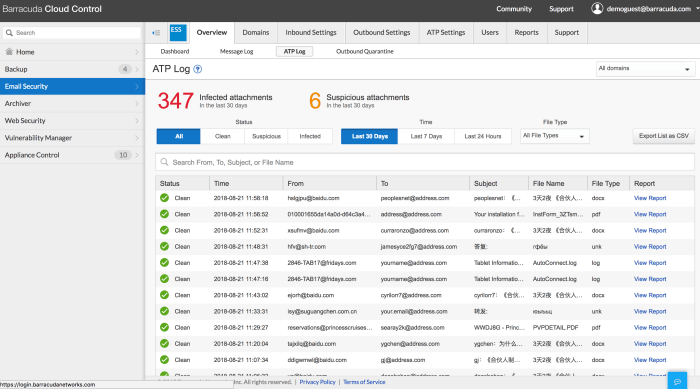
Source: g2crowd.com
Embracing a comprehensive defense strategy requires more than just deploying software; it demands a cultural shift toward unwavering vigilance and intelligent automation. As cyber adversaries continue to evolve their tactics, organizations that arm themselves with advanced cloud intelligence and cohesive integration will transform potential vulnerabilities into stepping stones of absolute digital resilience, empowering their workforce to navigate the future with confidence and peace of mind.
