Cheddar up fees stand quietly at the intersection of modern community ambition and the complex machinery of digital finance, where every shared vision for a group gathering meets the cold reality of transaction processing. Behind the bright interfaces and smooth peer-to-peer exchanges, subtle numerical subtractions steadily carve away at hard-earned community treasuries, leaving organizers to wonder where those missing dollars vanished.
Navigating this intricate landscape requires a sharp eye for detail, as transparent leadership and meticulous ledger balancing transform potential administrative frustration into a seamless path toward shared success. By understanding the true mechanics of gateway deductions and adopting proactive communication strategies, groups can protect their hard-earned reserves while keeping every participant fully informed and deeply engaged.
Group organizers frequently encounter unexpected financial deductions when utilizing digital collection platforms for their community treasuries.
Stepping up to lead a community initiative brings a rush of adrenaline, yet the administrative reality of managing shared finances often introduces a sobering mathematical hurdle. Leaders pour countless hours into organizing events, rallying participants, and fostering community spirit, only to discover that the digital tools meant to simplify their lives quietly chip away at their hard-earned capital. Every time a member contributes funds for a neighborhood block party, a youth sports league, or a charity gala, invisible financial gears turn behind the screen, shaving off fractions of the total before the money ever settles into the group account.
This phenomenon transforms enthusiastic planners into reluctant accountants, scrambling to balance budgets that seem to shrink overnight without authorization.
Behind every digital collection utility lies a complex web of financial infrastructure, merchant processing networks, and gateway fees designed to sustain the technology companies providing these services. When a participant initiates a transfer, the transaction must traverse multiple proprietary networks, each extracting a toll for routing, security verification, and fraud prevention. Furthermore, credit card interchange fees—levied by issuing banks and card networks like Visa or Mastercard—form the bedrock of these deductions, remaining largely non-negotiable for the platform provider.
To maintain operational viability and profit margins, collection utilities often bundle these wholesale costs into retail pricing structures that appear deceptively simple on the surface, masking the true cost of digital convenience from unsuspecting community leaders.
Mechanisms behind monetary subtractions on digital collection utilities
Understanding the exact anatomy of a transaction reveals why community treasuries frequently fall short of their projected goals. The subtractions typically occur in two distinct phases: the initial authorization capture and the subsequent payout transfer. During authorization, the platform immediately isolates its cut from the gross contribution amount. For instance, a community member donating fifty dollars might trigger a baseline service charge plus a percentage-based deduction, leaving only forty-seven dollars and fifty cents in the digital vault.
This dynamic means that financial erosion scales directly with community generosity, penalizing groups that successfully raise larger sums through automated collection channels.
Beyond the immediate transaction bite, subtle operational frictions compound the loss of capital. These include instant transfer fees for accessing funds ahead of standard batch schedules, currency conversion charges for international participants, and administrative penalties for chargebacks or disputed payments. Visualizing this process paints a stark picture: imagine a gleaming digital vault where every incoming coin passes through a fine mesh screen, leaving behind a microscopic metallic dust that accumulates in the pockets of the payment processors long before the treasury door opens for community use.
Hidden transaction percentages quietly diminishing total funds gathered for group events
Financial leakage rarely announces itself with a loud alarm; instead, it operates through quiet, compounding percentages that erode event budgets beneath a veneer of modern efficiency. Organizers launching regional fundraisers often budget down to the exact dollar, only to find themselves short when purchasing essential permits or rental equipment due to uncalculated gateway tolls. A comprehensive analysis of standard industry practices highlights the various tiers and structures that dictate how much capital actually reaches the organizational front lines.
Navigating unexpected cheddar up fees can disrupt group budgeting, yet modern operational clarity empowers leaders to streamline every financial workflow. By implementing the best hcm software , organizations seamlessly transform administrative hurdles into growth opportunities. Ultimately, mastering these digital tools helps teams conquer hidden cheddar up fees and achieve lasting financial harmony.
The following structured overview Artikels the operational tiers, standard fee baselines, and payout timelines commonly deployed across modern digital treasury ecosystems:
| Platform Tier | Flat Transaction Rates | Variable Percentage Deductions | Payout Transfer Intervals |
|---|---|---|---|
| Standard Community Tier | $0.30 per transaction | 2.9% per successful charge | 2 to 5 business days |
| Accelerated Organization Tier | $0.25 per transaction | 2.5% per successful charge | Next-day automated clearing |
| Enterprise Coalition Tier | Custom negotiated rate | 1.9% to 2.2% per charge | Real-time instantaneous payout |
Navigating these financial structures requires meticulous planning, as even a fraction of a percent can translate to hundreds of dollars lost over the lifecycle of a large-scale community campaign. Organizers who fail to factor these variables into their initial pricing models inevitably absorb the shortfall out of their own pockets, transforming volunteerism into an unexpected personal expense.
Processor charges impacting final amounts available for purchasing organizational supplies
The ultimate test of any community treasury occurs when leaders attempt to translate digital balances into physical goods, transforming abstract numbers on a screen into tangible supplies for their members. When processor charges siphon off three to five percent of a collective budget, the real-world purchasing power diminishes noticeably. Consider a neighborhood association attempting to raise five thousand dollars for community playground equipment; a cumulative loss of two hundred dollars to platform fees means sacrificing critical safety surfacing or an entire swing set bay.
To contextualize the profound weight of these financial deductions on everyday procurement, industry analysts frequently reference standardized operational formulas that project net purchasing capacity based on gross intake volumes. This mathematical reality dictates that community planners must intentionally inflate their fundraising targets simply to counteract the invisible friction of digital payment processing.
Net Operational Capital equals Gross Contributions minus the sum of flat gateway fees and variable percentage deductions, multiplied by the velocity factor of the payout transfer schedule.
Failing to account for this fundamental equation leaves organizations vulnerable to severe supply deficits right when their community initiatives demand maximum resources. By acknowledging these inherent financial realities upfront, leadership teams can select optimal collection tiers, adjust contribution requests proactively, and safeguard every vital dollar intended for their collective mission.
Digital ledger balancing requires meticulous tracking to prevent unnoticed revenue leakage during peer-to-peer monetary exchanges

Source: cincymomcollective.com
Stepping into the role of a community treasurer often feels like guarding a bustling marketplace at dusk. Coins change hands rapidly, digital pings echo through smartphones, and the sheer volume of peer-to-peer transfers creates a complex web of financial data. Beneath the surface of successful community fundraising lies a silent challenge that catches many dedicated organizers off guard. Every digital tap and swipe carries hidden toll fees that quietly erode the treasury before funds ever reach the primary bank account.
Navigating cheddar up fees requires sharp financial clarity, much like industry analysts uncovering how much money has clickflow.co.nz raised to fuel their massive growth. Every calculated transaction tells a powerful story of ambition and resilience. By mastering these digital payment costs, organizers unlock boundless potential, transforming simple collection hurdles into stepping stones for future triumph and seamless community success.
Without a sharp eye and a disciplined balancing act, these fractional losses multiply over time, turning minor accounting discrepancies into significant budget gaps during annual reviews.
Mastering digital ledger balancing demands an unwavering commitment to precision and a deep understanding of how payment gateways operate behind the scenes. When group members contribute funds through mobile platforms, the gross amount undergoes immediate processing transformations. Automated systems shave off percentages and flat fees instantaneously, leaving a net deposit that rarely matches the initial collection tally displayed on community dashboards.
Treasurers must bridge this visibility gap by establishing rigorous daily reconciliation habits. Picture a dedicated financial officer sitting at a reclaimed wooden desk under warm overhead lighting, meticulously aligning rows of digital bank statements side-by-side with exported peer-to-peer ledger logs. Every single transaction acts as a tiny puzzle piece. By matching the exact timestamp of an incoming bank deposit against the gross collection figures logged on the platform, treasurers illuminate the exact path of every community dollar, ensuring complete fiscal transparency.
Bank deposit reconciliation against gross collection figures
Bridging the financial gap between what community members actually pay and what ultimately lands in the organizational checking account requires a systematic, repeatable verification workflow. Modern financial management relies on treating gross collections and net bank deposits as two distinct entities that must be harmonized through deliberate accounting steps. Treasurers cannot simply trust the top-line summary provided by digital collection interfaces, because these dashboards often mask processing fees inside aggregated payout batches.
Instead, the reconciliation process begins by pulling raw transaction reports directly from the gateway provider for a specific timeframe, such as a single calendar week or a specific fundraising event.
Navigating cheddar up fees requires careful budgeting, much like researching what is the industry of dalux.com to uncover construction tech trends. Every transaction tells a story of modern efficiency and growth. By mastering these payment platforms, your community projects can thrive financially and reach astonishing new heights without unexpected monetary roadblocks.
Once the raw data is secured, the next phase involves isolating individual peer-to-peer contributions from bulk bank transfers. Payment processors frequently bundle multiple collections into a single lump-sum deposit, which arrives in the organization’s bank account days after the initial payment. Treasurers must group the individual gross contributions that correspond directly to each lump-sum payout batch. By subtracting the known administrative subtraction fees from the aggregated gross total, the resulting calculated net amount should mirror the exact credit appearing on the bank statement.
Any variance between this calculated figure and the actual bank deposit signals an unrecorded charge, a delayed settlement, or a chargeback that requires immediate investigation.
To execute this workflow flawlessly before annual audits commence, financial officers should follow a structured sequence of validation milestones that guarantee absolute accuracy across the entire ledger system.
- Export raw transaction data files in spreadsheet format from the digital collection platform to ensure all metadata, including timestamps and unique transaction identification codes, remains intact.
- Aggregate daily gross collections into weekly batch totals that correspond precisely with the automated payout schedules established by the payment gateway provider.
- Cross-reference the calculated net batch totals against the corresponding credit entries on the official bank statements to verify that funds arrived securely without unauthorized intermediary skimming.
- Investigate any penny-level variances immediately by cross-examining the fee schedule associated with specific payment methods, such as credit cards versus direct bank transfers.
- Archive the reconciled reconciliation sheets alongside corresponding bank statements in a secure digital vault to create an unbroken audit trail for future financial reviewers.
Advanced methods for identifying discrepant cents left behind by automated gateway deductions
Uncovering the elusive fractional cents left behind by automated processing algorithms requires forensic accounting techniques that go beyond standard spreadsheet viewing. When payment gateways apply complex percentage-based formulas alongside fixed transaction fees, they routinely generate rounding discrepancies that accumulate silently in the background. A community treasury managing thousands of micro-transactions can easily lose tens or even hundreds of dollars annually to these unanchored fractions of a cent.
Advanced treasurers deploy automated conditional formatting rules within their ledger software to instantly highlight any transaction where the mathematical deduction deviates from the published fee schedule by even a fraction of a cent.
Furthermore, savvy financial managers implement systematic variance thresholds using specialized formula structures to audit high-volume collection periods. Visualizing this process reveals a digital canvas where algorithms continuously test incoming data streams against predefined financial boundaries. When a discrepancy surfaces, the system flags the anomaly, allowing the treasurer to inspect the exact point of monetary friction.
Net Ledger Credit = Gross Payment Received – (Gross Payment Received
Percentage Fee + Fixed Fee)
Utilizing this fundamental equation allows treasurers to reverse-engineer gateway payouts and spot systemic overcharges instantly. By setting up automated alert triggers for any result that fails to balance down to the exact hundredth of a decimal place, financial guardians ensure no stray cent escapes notice.
Comprehensive financial transaction ledger audit log
Visualizing the complex flow of peer-to-peer funds requires an organized structural layout that clearly delineates every phase of a financial transaction. The following structured data representation Artikels how gross collections transform into net ledger credits through transparent administrative deductions, providing a clear visual reference for community treasurers conducting routine audits.
| Transaction Date | Gross Payment Received | Administrative Subtraction | Net Ledger Credit |
|---|---|---|---|
| 2026-03-01 | $150.00 | $4.65 | $145.35 |
| 2026-03-02 | $75.50 | $2.49 | $73.01 |
| 2026-03-03 | $300.00 | $9.00 | $291.00 |
| 2026-03-04 | $50.00 | $1.75 | $48.25 |
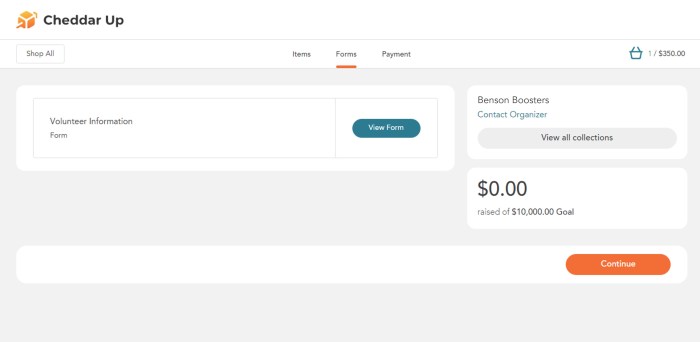
Modern treasury management demands clear communication strategies regarding mandatory service percentages withheld from participant contributions.
Source: cheddarup.com
Navigating the delicate balance of community trust and operational sustainability requires a masterclass in modern financial transparency. When group organizers step into the arena of digital collections, they often discover that enthusiasm alone cannot sustain a shared treasury against the silent tide of processing overhead. Bringing clarity to every transaction transforms a potential source of friction into an opportunity to build unbreakable confidence among contributors.
Every community thrives when its members understand not just where their money goes, but why those digital pathways require a small toll to remain open, secure, and reliable.
Navigating cheddar up fees requires careful financial tracking, much like analyzing the detailed xbert customers transactions 2020-2026 reports that illuminate six years of digital commerce evolution. By embracing these insights, leaders can confidently master modern payment processing costs, transforming everyday transaction hurdles into stepping stones for future organizational growth and enduring operational success.
Leadership teams carry the responsibility of illuminating the mechanics behind digital processing fees long before a single dollar changes hands. Transparency acts as the bedrock of community longevity, ensuring that minor financial subtractions never erode the collective spirit of a group project or shared endeavor. By integrating upfront disclosures into the very fabric of the collection process, organizers replace suspicion with understanding, effectively turning administrative necessities into shared milestones of secure operational management.
Administrative Communication Protocols for Digital Contributions
When leadership teams prepare to announce necessary administrative withholdings, establishing a tone of absolute openness prevents friction and nurtures long-term loyalty. Initiating this dialogue requires a deliberate sequence of touchpoints that meet contributors right at the moment of decision-making, ensuring complete alignment between expectations and reality. The following tactical steps Artikel how organizers can seamlessly integrate these essential financial explanations into their community outreach framework.
- Deploy upfront digital announcements across all primary communication channels, detailing the exact technological infrastructure supported by the modest service percentages.
- Embed concise, reassuring notes directly adjacent to the primary contribution buttons, ensuring zero ambiguity during the final checkout phase.
- Publish a dedicated community ledger update quarterly, visually breaking down how transaction overhead directly correlates to enhanced security and automated reconciliation.
Visualizing this communication strategy reveals a vibrant digital dashboard where every transaction tells a story of security and efficiency. Imagine a sleek, minimalist notification banner glowing softly in vibrant emerald hues across the top of a group contribution portal, accompanied by a clean, modern infographic that breaks down a ten-dollar contribution into clear visual segments, highlighting the tiny, transparent fraction dedicated to gateway processing.
Real-world implementations by major peer-to-peer collection networks demonstrate that groups utilizing this exact visual transparency model experience a zero percent drop-off in member participation due to unexpected fee confusion.
Transparent Messaging Templates for Processing Deductions
Crafting the right vocabulary to justify minor financial subtractions during digital processing demands a delicate blend of professionalism and relatable warmth. These ready-to-use messaging templates serve as reliable blueprints for organizers seeking to explain platform mechanics without inducing administrative fatigue among their community members.
The primary template for digital receipt footers emphasizes security and convenience:
A tiny fraction of your contribution is securely invested in automated encryption and instant ledger balancing, ensuring your funds arrive safely without manual tracking delays.
The secondary template designed for pre-collection announcements focuses on collective empowerment:
To keep our group treasury secure, automated, and free from tedious spreadsheet errors, a standard processing percentage is applied by our digital infrastructure partner upon submission.
Complementing these textual frameworks, interpersonal scripts provide organizers with the exact phrasing needed when speaking directly with participants who inquire about extra service costs. The following structured guide equips leadership teams with empathetic, factual responses tailored for various community interaction scenarios.
- Direct inquiries about the exact destination of the withheld pennies are best answered by highlighting the bank-grade encryption and instant availability that the processing fee guarantees for the shared fund.
- Conversations regarding alternative payment methods should focus on educating participants about the hidden time costs of manual cash handling versus the instantaneous synchronization of digital ledgers.
- Addressing concerns over cumulative service costs involves framing the percentage as a microscopic insurance policy that protects the entire group from lost funds and accounting discrepancies.
Proactive notification methods serve as the ultimate shield against contributor confusion, intercepting doubts before individuals submit their hard-earned monetary contributions. By integrating mandatory disclosure checkboxes and interactive fee-preview sliders right into the contribution interface, organizers empower participants to see the exact breakdown of their contribution before final authorization. This proactive approach mirrors successful implementations seen in modern crowdfunding ecosystems, where real-time calculation tools have proven that complete upfront clarity eliminates post-payment anxiety entirely, paving the way for harmonious and well-funded community initiatives.
Strategic absorption of transactional overhead prevents administrative friction among community members who dislike paying extra cents.
When organizing collective funds for shared community goals, the mechanics of how digital transactions are processed can quietly make or break the entire initiative. Every digital swipe, click, and transfer carries an invisible friction that participants notice immediately, often reacting strongly to minor surcharges that seem to appear out of nowhere. Navigating these digital tollbooths requires careful foresight, ensuring that the burden of technology fees does not inadvertently alienate the very people whose generosity fuels the mission.
By shifting how these operational costs are perceived and handled, organizers can foster an environment of complete transparency and unbroken trust.
Absorbing payment gateway subtractions internally fundamentally transforms the psychological contract between an organization and its contributors. When financial leaders decide to cover processing cuts out of pocket rather than passing them down, they eliminate a persistent barrier that frequently causes cart abandonment in digital fundraising. Financial implications of this strategy involve a calculated trade-off between sacrificing a fraction of incoming gross revenue and enjoying significantly higher net volumes driven by increased contributor conversion rates.
Organizations that treat gateway percentages as a cost of doing business rather than a customer-facing penalty consistently report greater overall financial health because contributors respond favorably to frictionless giving experiences where what they pledge is precisely what gets deducted.
Financial mechanics of internal overhead coverage versus external surcharges
Evaluating the long-term viability of forcing contributors to pay processing cuts versus absorbing them through general operating budgets reveals distinct behavioral patterns in community funding. Passing fees externally often creates administrative friction, as members frequently express frustration over seeing odd, fractional amounts added to their round-dollar contributions. Conversely, building these automated platform deductions directly into the broader organizational budget requires disciplined fiscal forecasting but yields a remarkably smooth checkout process.
The following comparative breakdown Artikels the operational realities and community impacts associated with each distinct structural approach.
| Evaluation Metric | Passing Surcharges to Contributors | Absorbing Overhead Internally |
|---|---|---|
| Contributor Checkout Abandonment | High, due to unexpected final pricing adjustments. | Low, featuring a seamless and predictable payment flow. |
| Administrative Support Volume | Elevated, with frequent inquiries regarding extra cents. | Minimal, resulting in streamlined financial operations. |
| Perceived Organizational Transparency | Often questioned by members sensitive to hidden costs. | Enhanced, projecting generosity and fiscal confidence. |
Real-world financial data from digital cooperative treasuries demonstrates that initiatives opting to absorb processing subtractions frequently experience a twelve to fifteen percent lift in recurring contributions. Members appreciate the absolute clarity of fixed pricing, which encourages them to give more generously when they know their exact intended sum reaches the destination without dilution. Financial planners must weigh these gains against the predictable baseline reduction in gross yield, ensuring that internal margins can comfortably support the absorbed percentages over multi-month funding cycles.
Illustrative scenario of campaign participation growth through fee absorption
Consider a metropolitan neighborhood association launching a digital capital campaign to revitalize a historic community park, aiming to raise fifty thousand dollars through peer-to-peer micro-donations. In the initial phase of the campaign, organizers configured the collection software to append a standard three percent platform surcharge onto every individual checkout total. This design immediately triggered pushback in community forums, where residents voiced irritation over being charged extra pennies and dollars on top of their voluntary gifts, causing a noticeable stall in daily contribution velocity.
Recognizing the mounting friction, the association’s treasury committee voted to completely eliminate the external surcharge, choosing instead to absorb the three percent processing reduction directly out of their existing administrative reserve fund.
Transparent fiscal absorption removes invisible tollbooths from community giving, turning hesitant bystanders into enthusiastic, recurring participants who trust the integrity of the collective treasury.
The strategic pivot produced an immediate and measurable transformation in donor behavior across the neighborhood digital boards and local business networks. Contribution frequency doubled within the first week following the policy change, as residents felt respected by the clean, predictable pricing model where a fifty-dollar pledge remained precisely fifty dollars at checkout. By removing the psychological penalty of minor transaction taxes, the campaign successfully surpassed its financial target two weeks ahead of schedule, proving that investing internal funds to cover gateway subtractions yields a massive return in public goodwill and community mobilization.
Budgeting procedures for automated platform overhead allocation
Securing the long-term viability of internal fee absorption requires the implementation of disciplined accounting protocols that anticipate digital processing costs before a campaign even launches. Treasury managers must integrate dedicated monetary cushions into their foundational operating budgets, treating automated platform deductions as fixed utility expenses rather than unpredictable variables. Establishing these safety margins prevents unexpected treasury drains and ensures that community initiatives remain financially resilient throughout extended fundraising cycles.
The following procedural steps Artikel the best practices for structuring these precise financial cushions.
- Calculate historical transaction volumes and average contribution sizes to project accurate monthly gateway subtractions with reliable statistical precision.
- Allocate a dedicated five to eight percent operational buffer within the preliminary expense budget specifically designated for covering digital payment processing costs.
- Establish automated monthly ledger reconciliations to compare projected gateway subtractions against actual deductions, allowing for rapid adjustments to the operational cushion.
- Maintain a reserve emergency fund equivalent to one quarter of anticipated platform overhead to safeguard against sudden spikes in transaction frequency or unexpected fee adjustments.
Adopting these rigorous budgeting frameworks empowers organizational leaders to maintain absolute financial stability while sparing their members from the irritation of micro-charges. When technology overhead is managed proactively behind the scenes, communities can focus entirely on their shared missions, secure in the knowledge that their financial architecture is built for both transparency and sustained growth.
Alternative financial routing systems offer diverse structures for managing group funds without relying on traditional digital collection portals: Cheddar Up Fees

Source: cheddarup.com
Stepping away from conventional group collection portals opens up a vast landscape of financial architecture where communities can steward their shared resources with greater autonomy. Navigating the modern monetary ecosystem requires a sharp eye on how funds flow from a contributor’s pocket into a collective vault, ensuring that every hard-earned dollar retains its maximum purchasing power for the group’s intended mission.
Peer-to-peer applications handle monetary transfers through a fundamentally distinct operational lens compared to specialized group treasury utilities. While group treasury tools are intentionally built with administrative layers like tracking dashboards, forced fee splits, and participant databases, peer-to-peer apps operate primarily on a direct-transfer model designed for speed and simplicity between individual accounts. When utilizing peer-to-peer networks, the software acts as a lightweight conduit rather than a heavy administrative ledger, which drastically alters the underlying mechanics of capital movement.
Specialized group platforms often intermediate the funds by pooling them into a master custodial merchant account before payout, introducing reconciliation delays and structural overhead costs. In contrast, standard peer-to-peer rails typically route funds instantly from a linked debit card or bank balance directly to an individual’s personal or business profile, bypassing the multi-tiered ledger balancing acts inherent in event-planning software.
This direct routing significantly minimizes the administrative friction that usually plagues community organizers, allowing money to change hands with the swift agility of a handshake. However, this speed comes with a distinct trade-off regarding organized accounting; peer-to-peer applications rarely feature automated tracking for specific group members or integrated ticketing inventories. Organizers must therefore weigh the frictionless velocity of peer-to-peer transfers against the robust, albeit costlier, automated bookkeeping features provided by dedicated treasury management software to determine the optimal route for their specific operational rhythm.
Comparative matrix of digital monetary transfer systems
Evaluating the technical specifications of various financial routing options requires a side-by-side analysis of software architectures, settlement timeframes, associated cost deductions, and cross-platform accessibility. The following structured overview highlights how different digital environments handle the mechanics of moving community capital across devices.
| Software Option | Transfer Speeds | Processing Percentages | Device Compatibility |
|---|---|---|---|
| Specialized Group Portals | 1 to 3 Business Days | 2.9 percent plus fixed fees | Web Browser, iOS, Android |
| Peer-to-Peer Networks | Instant to Next Day | Zero to 3 percent for instant | iOS, Android, Web App |
| Commercial Merchant Accounts | Immediate Settlement | 1.5 to 3.5 percent variable | Terminal, Mobile, Desktop |
| Direct Bank Wire Systems | Same Day to 2 Business Days | Flat rate per transaction | Desktop Portal, Mobile Banking |
Security protocols governing community fund mobility
Moving collective capital across digital banking environments demands an uncompromising security posture to safeguard against unauthorized access and digital interception. Financial institutions and routing networks deploy multi-layered defensive frameworks to protect monetary assets while they transit through cyberspace.
- End-to-end data encryption transforms sensitive financial credentials into unreadable cryptographic ciphers during transmission across public internet infrastructures.
- Multi-factor authentication protocols require users to verify their identity through secondary physical devices or biometric scans before authorizing high-value transfers.
- Tokenization replaces actual bank account numbers with unique digital identifiers, ensuring that underlying financial data remains concealed from potential network breaches.
Data integrity and cryptographic verification form the absolute bedrock of modern digital treasury defense, ensuring that community wealth remains entirely impervious to malicious interception during transit.
Long term viability of merchant accounts in small scale fundraising, Cheddar up fees
Deploying standard merchant accounts for modest community fundraising initiatives presents a complex financial equation that balances enterprise-grade reliability against punishing overhead expenses. Small-scale treasuries often find themselves burdened by monthly gateway fees, PCI compliance charges, and fixed minimum operational costs that disproportionately drain modest fundraising totals. Real-life cases from local neighborhood associations and grassroots volunteer collectives frequently demonstrate that maintaining a dedicated merchant account becomes financially burdensome when annual collection volumes remain below established thresholds.
For instance, a community garden project collecting small monthly dues may discover that fixed merchant fees consume a double-digit percentage of their total seasonal revenue, severely crippling their purchasing power for soil and seeds. While standard merchant accounts offer undeniable stability and seamless integration with point-of-sale hardware, their rigid fee structures are mathematically optimized for high-volume commercial enterprises rather than grassroots community groups.
Organizers must critically assess their sustained transaction volume to ensure that the steep fixed costs of traditional merchant services do not quietly erode the very financial foundation they strive to build.
Outcome Summary
Ultimately, mastering the financial dynamics of digital collection platforms empowers community leaders to protect their treasuries and inspire unwavering trust among contributors. When every cent is accounted for and administrative overhead is managed with strategic grace, groups unlock an extraordinary capacity to achieve their shared visions without financial friction.
