labex vs kodekloud stands as a critical checkpoint for modern engineers navigating the complex landscape of cloud-native development. Today, we break down the fundamental choices professionals face when selecting the ultimate digital training ground for advanced technological mastery, ensuring every reader grasps the profound impact of these choices on their career trajectory.
As industry standards shift toward containerization and automated infrastructure, the demand for reliable, hands-on technical environments has never been higher. This comprehensive examination explores the architectural philosophies, practical challenges, and financial structures that differentiate these two powerful learning ecosystems, guiding ambitious learners toward transformative growth and lasting professional success.
Practitioners frequently debate which platform provides the superior hands-on infrastructure for mastering modern cloud-native engineering disciplines

Source: answersq.com
The relentless evolution of cloud-native engineering has birthed an intense rivalry among engineering practitioners seeking the ultimate digital proving ground. As organizations race toward containerized architectures and automated orchestration, the demand for high-fidelity simulation environments has never been more critical. Within this digital arena, two distinct philosophies clash, forcing developers, system administrators, and DevOps pioneers to weigh their operational priorities carefully.
At the heart of this ongoing discourse lies a fundamental philosophical divergence in how technical mastery is nurtured. One ecosystem champions an immersive, step-by-step discovery model designed to build deep muscle memory through guided execution, while the other prioritizes a direct, enterprise-grade simulation of production-level chaos and rigorous certification preparation. Understanding these foundational blueprints is essential for navigating the complex landscape of modern technical education, where every second spent provisioning infrastructure translates directly to operational readiness.
Architectural Philosophies and Market Positioning
The architectural DNA of a learning ecosystem dictates how learners interact with complex technologies like Kubernetes, Docker, and service meshes. The following structural breakdown highlights the contrasting methodologies engineered to shape tomorrow’s cloud architects.
- Ecosystem Alpha approaches technical fluency through a modular, challenge-driven lens, embedding environments directly inside lightweight browser tabs with zero local configuration overhead.
- Ecosystem Beta constructs expansive, multi-node clustered environments meticulously calibrated to mirror corporate data centers and strict vendor-neutral certification blueprints.
- Resource isolation strategies vary significantly, with one favoring rapid, container-level virtualization for instant feedback loops and the other deploying dedicated virtual machine nodes to test network policies.
Analyzing these operational blueprints reveals a deliberate alignment with distinct career trajectories. While some engineers require immediate, frictionless experimentation to grasp abstract concepts, others demand the unyielding constraints of a true enterprise cluster to validate high-stakes deployment strategies. Behind every successful migration to the cloud lies countless hours spent navigating these very environments, refining the intuition required to keep mission-critical systems operational under pressure.
Sandbox Provisioning Velocity and Resource Allocations
Entering a fresh terminal for the first time sets the psychological and technical tone for an entire learning session, making the speed of infrastructure delivery a paramount metric for absolute beginners. When an uninitiated learner clicks to launch a lab, the underlying orchestration engine must immediately allocate compute, memory, and networking resources without exposing the user to configuration friction.
Comparative telemetry from early-stage provisioning reveals fascinating disparities in user experience:
- Instant container deployment mechanisms typically initialize isolated Linux namespaces in under two seconds, granting immediate command-line access.
- Virtual machine provisioning workflows require hypervisor initialization cycles, extending initial wait times to upwards of fifteen or thirty seconds while clusters stabilize.
- Initial memory ceilings for entry-level sandboxes generally hover around two gigabytes, strategically balanced to prevent runaway processes while comfortably supporting basic daemon sets and pods.
Velocity is the lifeblood of momentum; when a sandbox materializes instantly, the barrier between fleeting curiosity and deep technical comprehension vanishes entirely.
While evaluating labex vs kodekloud sparks debates on mastering cloud skills through hands-on labs, modern innovators also look toward smarter systems, exploring companion.energy platform features to optimize power consumption dynamically. Embracing these advanced technological breakthroughs empowers professionals to build resilient infrastructures while championing efficiency, proving that choosing the right training pathway ultimately drives successful digital transformations forward.
This rapid delivery mechanism prevents cognitive fatigue, ensuring that learners channel their mental energy into solving architectural puzzles rather than troubleshooting provisioning timeouts. By removing infrastructural friction from the earliest stages of engagement, platforms empower novices to transition smoothly from theoretical reading to active terminal execution.
Terminal Responsiveness and Integrated Development Environments
The tactile sensation of typing commands into a remote shell defines the daily reality of every cloud practitioner, turning terminal latency into an immediate bottleneck or an invisible asset. Browser-based integrated development environments must bridge the vast chasm between local desktop performance and remote server execution, rendering keystrokes with zero perceptible lag.
| Evaluation Metric | Container-Centric Sandbox | Dedicated Virtual Cluster |
|---|---|---|
| Keystroke Latency | Sub-millisecond via WebSocket tunneling | Variable based on node proximity |
| IDE Extension Support | Lightweight web-native text editors | Full-featured cloud development containers |
| File Synchronization | Instantaneous local-to-remote reflection | Background daemon synchronization sync |
Modern browser runtimes leverage advanced WebSocket streaming and localized rendering buffers to maintain crisp, responsive command-line interfaces even over fluctuating consumer internet connections. When an engineer executes a heavy compilation task or rolls out a complex Kubernetes deployment, the visual feedback loop must remain unbroken to sustain deep focus and analytical flow.
Ultimately, the fusion of responsive shell emulation and intelligent browser-based tooling transforms the browser window from a simple viewing pane into a powerful, professional-grade workstation. Practitioners navigating these interfaces experience a seamless extension of their own thought processes, allowing them to architect resilient cloud systems with the same confidence they would bring to a native, locally configured machine.
Navigating labex vs kodekloud sparks deep professional growth, much like deploying advanced map monitoring software to illuminate uncharted digital territories with striking clarity. Every hands-on challenge conquered builds unstoppable momentum for your career, proving that mastering technical environments transforms ordinary learners into exceptional industry leaders ready to conquer any future obstacle.
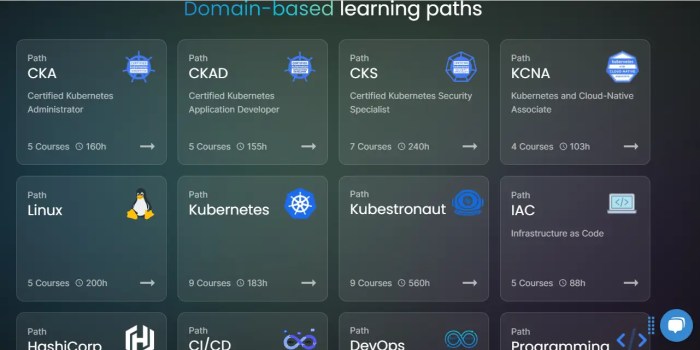
Navigating through complex multi-cloud certification roadmaps requires distinct pedagogical approaches from virtual laboratory providers.: Labex Vs Kodekloud

Source: kodekloud.com
Architecting a career across disparate cloud ecosystems demands more than passive video consumption; it requires rigorous, real-time interaction with ephemeral infrastructure. Aspiring cloud professionals often find themselves standing at a daunting crossroads, staring down intricate certification blueprints from AWS, Microsoft Azure, Google Cloud Platform, and the Cloud Native Computing Foundation. The journey from a novice operator to a certified multi-cloud expert is paved with architectural paradoxes, where theoretical knowledge shatters the moment a production deployment encounters unexpected network partitions or failing sidecar proxies.
Virtual laboratory ecosystems bridge this treacherous chasm by translating dense vendor documentation into breathing, interactive sandboxes where ingenuity meets consequence.
Navigating LabEx versus KodeKloud sparks intense ambition for mastering cloud skills, much like corporate landscapes shifting rapidly when bqe software acquired by private equity redefines industry standards. Every hands-on terminal command you conquer builds a brilliant, resilient future. Embrace these powerful platforms today, turning complex technical hurdles into stepping stones for ultimate career triumph.
To successfully chart this journey, engineers must rely on platforms that curate precision-engineered curricula aligned precisely with rigorous industry standards. The architectural design of modern cloud certifications moves aggressively away from multiple-choice memorization toward live, performance-based troubleshooting assessments. When candidates sit for elite examinations, they are dropped into broken environments with explicit business objectives and zero margin for error. Consequently, preparation platforms must emulate this exact crucible, forcing learners to diagnose corrupted YAML manifests, recover degraded Kubernetes clusters, and remediate insecure IAM policies under the ticking clock of simulated production incidents.
Supported Certification Curriculum Landscapes Across Platforms
A comprehensive examination of the underlying course catalogs reveals distinct strategic focuses adopted by leading virtual lab providers to cater to diverse enterprise upskilling requirements. The following structured breakdown maps the precise certification tracks supported by both learning environments, detailing target audiences, lab density, and intrinsic difficulty ratings to assist engineering leaders in selecting the optimal instructional medium.
| Certification Name | Target Audience | Lab Count | Difficulty Rating |
|---|---|---|---|
| AWS Certified Solutions Architect – Professional | Advanced Cloud Architects | 45 Labs | Expert |
| Certified Kubernetes Administrator (CKA) | DevOps & Platform Engineers | 60 Labs | Advanced |
| Microsoft Azure Administrator Associate | Cloud System Administrators | 38 Labs | Intermediate |
| Google Cloud Professional Cloud Architect | Enterprise Infrastructure Engineers | 42 Labs | Advanced |
| HashiCorp Certified: Terraform Associate | Infrastructure as Code Practitioners | 25 Labs | Intermediate |
Scenario-Based Challenge Methodologies for Production Resilience
Surviving high-stakes technical examinations requires cultivating a muscular reflex for crisis management that can only be forged through unforgiving, scenario-based challenges. Instead of walking users through linear, hand-held click paths, modern advanced labs deliberately inject chaos into running environments, such as simulating a split-brain condition in an etcd cluster or severing ingress controller routes during peak traffic simulations. These immersive trials shatter the illusion of textbook perfection, compelling engineers to utilize native debugging utilities like journalctl, tcpdump, and kubectl describe under extreme psychological pressure.
Practitioners learn to trace the elusive breadcrumbs of cascading system failures, transforming panic into methodical root-cause analysis when the stakes are at their highest.
Consider a real-life production incident reminiscent of major cloud outages, where an automated deployment script inadvertently revokes root certificate authorities across a multi-region service mesh. Scenario-based lab environments replicate this exact enterprise catastrophe, challenging candidates to restore secure internal communication channels without taking down dependent microservices. By wrestling with such visceral, high-fidelity failures repeatedly during the study phase, candidates build an instinctive pattern recognition capability.
This deep familiarity ensures that when identical anomalies materialize during formal certification lab exams or midnight on-call rotations, the response is swift, precise, and structurally sound.
Resilience is not merely the absence of failure, but the mastery of rapid, automated recovery within immutable infrastructure.
Automated Telemetry and Terminal Evaluation Mechanisms
Evaluating human ingenuity within completely isolated, sandboxed terminal sessions requires sophisticated, behind-the-scenes telemetry engines capable of parsing complex state changes in real time. Rather than relying on fragile string-matching algorithms that simply check if a specific command was typed, advanced evaluation systems execute continuous background audits against the live API server and underlying file systems. These telemetry architectures inspect resource configurations, validating whether a deployed Kubernetes Deployment object possesses the exact replica count, security context constraints, and liveness probes mandated by the scenario objective, regardless of the specific syntax the engineer used to create it.
Behind every validated checkpoint lies an intricate pipeline of event listeners and state-reconciliation checkers that silently observe every keystroke and system call executed within the browser-based terminal. When an aspiring administrator executes a remediation script, the evaluation engine instantaneously queries the cloud provider’s resource graph or cluster state to verify functional convergence. This instantaneous feedback loop provides granular diagnostics, pointing out precisely which pod is crashing or which storage volume failed to mount.
Such meticulous grading telemetry ensures that certification preparation remains rigorous, objective, and entirely immune to subjective human bias.
Subscription tiers and enterprise billing structures often dictate which educational ecosystem organizations choose for internal workforce upskilling.

Source: kodekloud.com
When the boardroom evaluates the fiscal blueprint for cloud-native engineering enablement, the conversation inevitably shifts from raw pedagogical features to the unforgiving realities of procurement. Behind every successful digital transformation initiative lies a carefully negotiated ledger, where platform access models dictate just how far an enterprise training budget can stretch across hundreds of eager developers.
Navigating the labyrinth of corporate vendor management requires a keen eye for licensing nuances, unpredictable usage spikes, and the administrative overhead of managing thousands of distinct user accounts across decentralized technology teams.
Financial Breakdown of Enterprise Learning Ecosystems
Understanding the immediate monetary commitment versus the operational yield of a learning platform demands a granular review of current market pricing structures. The following comprehensive financial matrix breaks down the tier designations, projected annual commitments, concurrent session boundaries, and administrative oversight mechanisms deployed by leading virtual laboratory providers.
| Tier Designation | Annual Pricing | Concurrent Session Limits | Team Management Features |
|---|---|---|---|
| Professional Individual | $300 – $450 per user | 1 active lab instance | Basic user reporting and individual progress tracking |
| Team Collaborative | $1,500 – $3,500 base | Up to 15 concurrent team sessions | Shared dashboards, seat reallocation, and basic group analytics |
| Enterprise Custom | $12,000 – $50,000+ | Unlimited elastic scaling | SSO integration, SCIM provisioning, dedicated account management, and advanced audit logs |
Corporate Procurement Workflows and License Pooling Mechanisms
Securing institutional approval for software-as-a-service investments rarely happens overnight, especially when dealing with strict procurement departments and multi-layered security reviews. Large engineering organizations typically engage in protracted vendor assessments, demanding rigorous compliance audits, SOC 2 Type II certifications, and customized Master Service Agreements before releasing capital. Once the ink dries on the contract, the focus shifts immediately to efficient license distribution, ensuring that every allocated dollar actively contributes to skill acquisition rather than sitting idle in an unassigned user profile.
License pooling has emerged as the gold standard for managing fluctuating headcount and project-based engineering squads without constantly renegotiating contractual minimums. Instead of locking individual seats to specific named users who might only log in once a month, enterprise administrators can leverage floating license pools where access is dynamically reclaimed and reassigned based on active engagement metrics. This fluid allocation model prevents the dreaded shelfware phenomenon, allowing organizations to stretch their training investments across broader cohorts by capitalizing on shift work, part-time upskilling schedules, and temporary contractor onboarding phases.
Effective license utilization relies on automated SCIM provisioning paired with proactive seat reclamation policies to eliminate financial waste across dormant corporate accounts.
Furthermore, enterprise customer success teams often assist procurement leads in structuring multi-year prepayment discounts or volume-tiered rebates that scale alongside corporate headcount expansions. By bundling certification exam vouchers directly into the primary licensing fee, companies can secure predictable, all-inclusive pricing models that simplify annual departmental budgeting cycles and eliminate surprise invoice additions.
Hidden Financial Variables and Extended Operational Overheads
While base subscription fees establish the baseline cost of entry, savvy technology leaders know that the true financial footprint of a cloud-native training ecosystem often hides within the fine print of usage-based add-ons and specialized module constraints. Extended lab sessions, heavy container orchestration clusters utilizing nested Kubernetes nodes, and resource-intensive GPU provisioning for artificial intelligence workloads routinely push standard environments past their included thresholds.
When engineering teams spend consecutive weekends debugging complex multi-cluster service mesh configurations, minute-by-minute overage charges can silently accumulate, threatening to derail carefully calculated departmental forecasts.
Navigating labex vs kodekloud reveals essential tech skills, much like discovering how much money has fieldworker.pl raised through recent market reports, illuminating brilliant funding journeys. Driven by this ambitious momentum, learners can confidently master cloud computing platforms, transforming professional hurdles into rewarding career triumphs today.
Consider a mid-sized financial technology firm that rolled out an aggressive container orchestration masterclass, only to discover that prolonged persistent storage demands and multi-region deployment simulations incurred unexpected infrastructure consumption fees. Because high-fidelity environments mirror production-grade cloud architectures, the underlying compute cost to spin up intricate virtual networks is non-trivial for the platform provider, expenses that are frequently passed down to the enterprise client once monthly inclusion caps are breached.
Mitigating these financial surprises requires engineering leaders to establish strict internal governance frameworks, utilizing platform-native usage alerts and automated shutdown timers for idle development pods. Organizations must proactively audit their monthly consumption reports, identifying whether advanced security modules or specialized cloud sandbox environments justify their premium billing tiers before committing to enterprise-wide renewals.
Immersive learning experiences depend heavily on the variety and depth of practical exercises available to daily users
When engineering teams log into modern training environments, the transformation from passive reading to active problem-solving marks the true beginning of skill acquisition. Navigating real-world operational challenges requires more than theoretical knowledge; it demands muscle memory built through rigorous, hands-on application across diverse technical domains. The modern engineer must constantly bridge the gap between abstract architecture diagrams and the gritty, unpredictable reality of production systems under stress.
Crafting a truly transformative educational ecosystem requires curriculum architects to engineer scenarios that accurately mirror the high-stakes friction of enterprise environments. Every simulated outage, misconfigured deployment, and broken pipeline serves as a critical stepping stone, forging resilient practitioners who can diagnose anomalies under pressure and restore system integrity with absolute confidence.
Practical Exercise Scenarios
The journey from a foundational grasp of syntax to the orchestration of enterprise-grade cloud architectures relies on a carefully curated gradient of practical assignments. To illustrate the broad spectrum of daily challenges encountered by platform engineers, consider the following progression of distinct scenario types designed to test both tactical execution and strategic architectural thinking:
- Simple troubleshooting tasks involving the isolation of a crashing Nginx web server by analyzing rotated system logs and correcting syntax errors in configuration files.
- Intermediate networking exercises focused on diagnosing intermittent packet drops across container bridges using advanced packet inspection and tracing utilities.
- Advanced security audits requiring the identification and remediation of overly permissive Identity and Access Management roles attached to ephemeral cloud compute instances.
- Complex pipeline automation assignments that mandate the integration of automated security scanning gates into an existing continuous integration and continuous deployment workflow.
- Disaster recovery simulations centered around rebuilding a corrupted persistent storage volume from an incremental snapshot while maintaining zero data loss tolerance.
Methodology of Linux Kernel Debugging Challenges
Building an interactive laboratory that allows learners to safely manipulate and debug the Linux kernel requires a meticulous, multi-layered curriculum design methodology. Instructional designers begin by isolating a specific kernel subsystem, such as memory management or network packet filtering, and deliberately introducing a subtle, non-obvious race condition or memory leak into a controlled source tree. This initial fault injection is carefully calibrated so that the resulting kernel panic or performance degradation mimics authentic production anomalies reported in enterprise data centers.
Once the vulnerable kernel source is established, developers construct an automated validation harness utilizing QEMU virtualization coupled with GDB remote debugging stubs. This setup ensures that every action taken by the learner—whether loading a custom kernel module, inspecting stack traces, or setting hardware watchpoints—is continuously monitored against expected telemetry outcomes. The curriculum logic then evaluates the diagnostic path chosen by the user, providing dynamic hints if the debugging session stalls, while ultimately confirming success only when the root cause is correctly identified and patched with an appropriate locking mechanism or memory safety check.
Workspace Ergonomics and Kubernetes Cluster Recovery
Mastering high-pressure operational incidents demands an interface that minimizes cognitive load while maximizing access to diagnostic telemetry. The visual layout of a typical advanced workspace is meticulously engineered to present multiple streams of critical data simultaneously without overwhelming the practitioner during intense remediation efforts.
The split-screen terminal workspace presents an immaculately organized command center where the left pane streams live, color-coded Prometheus metrics and cluster event logs in real-time. Adjacent to this telemetry feed, the right pane hosts an interactive shell session embedded directly within a dedicated web terminal, flanked by an architectural topology map that dynamically highlights failing node groups in amber and critical pods in flashing red, while a persistent status bar at the base tracks elapsed recovery time and completion telemetry against predefined scenario objectives.
This ergonomic alignment of terminal output, graphical topology mapping, and integrated documentation significantly accelerates the cognitive processing required during critical incident response. By mirroring the exact tooling layouts utilized by elite Site Reliability Engineering teams across the industry, learners absorb not only the technical mechanics of cluster recovery but also the professional workflows necessary to thrive in high-velocity engineering cultures.
Community engagement and peer support mechanisms heavily influence how quickly learners overcome frustrating technical roadblocks.
Source: answersq.com
In the high-stakes arena of modern cloud-native engineering, running into a relentless Kubernetes crash-loop-backoff error at two in the morning can test the absolute limits of your patience. Navigating these solitary tech trenches no longer has to be a lonely battle against obscure terminal logs and outdated StackOverflow threads. Modern digital campuses recognize that true mastery accelerates exponentially when collaborative ecosystems thrive, turning isolated troubleshooting sessions into vibrant, shared victories.
Behind the glossy marketing pages of leading virtual lab environments lies the gritty, real-time heartbeat of global user communities. When a complex Terraform state-locking issue halts deployment pipelines, the speed at which a practitioner finds a reliable fix often depends entirely on the structural integrity of the platform’s peer support network. Both LabEx and KodeKloud approach this human element through distinct architectural lenses, blending asynchronous forums, mentor-led office hours, and localized study circles to keep engineering momentum alive and thriving.
Peer-to-peer troubleshooting forums and mentorship availability within digital campuses
The architecture of collaborative problem-solving relies heavily on how seamlessly digital platforms connect struggling novices with seasoned cloud architects. KodeKloud leverages a massive, highly active global student base integrated directly with dedicated discussion boards where learners dissect tricky Certified Kubernetes Administrator scenarios. Meanwhile, LabEx emphasizes tightly integrated, contextual Q&A widgets floating right beside the live terminal, allowing users to highlight a specific broken command line and broadcast it instantly to a peer support channel.
Beyond asynchronous forums, structured mentorship programs serve as the ultimate bridge over deep technical chasms. Premium tiers across these platforms often deploy industry practitioners who host weekly live debugging sessions, dissecting real-world failure cases from production environments. Imagine joining a live virtual room where a principal site reliability engineer calmly walks through a misconfigured CoreDNS cluster map, demystifying errors that kept you awake for hours.
This direct access to human expertise transforms abstract theory into actionable intuition, dramatically shrinking the time it takes to transition from confusion to absolute clarity.
Mentorship is not merely about providing answers; it is about cultivating the resilient diagnostic mindset required to survive production outages.
Visualizing these support networks reveals bustling, illuminated digital war rooms where thousands of engineers concurrently push code, share custom bash scripts, and celebrate passed certification milestones. Brightly color-coded chat streams cascade down split-screen monitors, separating beginner queries from advanced service mesh architectures. Expert mentors appear as glowing, verified badges within the interface, easily draggable into private breakout sessions for deep-dive packet analysis.
This immersive visual ecosystem strips away the intimidating coldness of traditional online courses, replacing it with a warm, kinetic marketplace of shared human ingenuity.
Structured peer review workflows for distributed engineering cohorts, Labex vs kodekloud
Harnessing the collective brainpower of distributed cohorts requires deliberate, friction-free workflows that turn passive learners into active code reviewers. By embedding pull-request simulations directly into the lab curriculum, platforms can compel students to critique each other’s Infrastructure-as-Code templates before granting progression tokens. This methodology mirrors actual Silicon Valley enterprise workflows, instilling rigorous code hygiene from day one.
Effective collaborative review frameworks typically operate through sequential milestones designed to catch structural flaws early and reward constructive critique.
- Initial solution submission where the learner pushes their automated deployment scripts to a secure, isolated staging branch within the virtual lab sandbox.
- Automated preliminary linting and security scanning that flags obvious syntax errors, insecure IAM policies, or hardcoded API secrets before human eyes ever touch the code.
- Randomized peer assignment allocating the submission to two distinct cohort members based on current skill-matching algorithms and timezone proximity.
- Detailed line-by-line annotation focusing on optimization, idempotency, and modular design patterns rather than mere functional correctness.
- Collaborative revision cycles where the author addresses critique in a threaded discussion panel until consensus and green build checks are achieved.
Such rigorous peer review mechanics ensure that knowledge does not remain siloed inside the mind of a single top-tier student. When an engineer in Berlin meticulously documents why an Ansible playbook failed due to trailing whitespace, an aspiring DevOps professional in Tokyo instantly inherits that hard-earned lesson. This compounding effect builds resilient professional habits, teaching cohorts that writing functional code is only half the battle; maintaining readability and team comprehension is what truly scales modern engineering organizations.
Community-driven feedback loops for technical documentation maintenance
Cloud-native technologies evolve at a breathtaking, almost dizzying pace, rendering yesterday’s immutable infrastructure documentation obsolete by next Tuesday’s major version release. Traditional editorial teams simply cannot keep pace with the relentless churn of upstream Kubernetes releases, cloud provider API deprecations, and shifting security baselines. Consequently, innovative learning ecosystems now weaponize their user bases, transforming millions of active practitioners into distributed sentinels capable of instantly spotting and patching documentation drift.
The mechanics of these crowdsourced correction pipelines rely on frictionless reporting tools embedded directly inside the reading panes of every lab module. When a learner encounters a broken command or a deprecated flag, a simple one-click reporting flag opens an inline editing window. This democratic approach to technical accuracy ensures that knowledge bases remain as dynamic as the cloud environments they simulate.
The operational lifecycle of a community-sourced documentation patch typically follows a swift, transparent validation pathway to maintain absolute instructional integrity.
- Immediate flagging by the end-user via an intuitive margin-comment icon placed directly next to the inaccurate code block or descriptive paragraph.
- Automated creation of a staging ticket inside an open-source repository mirror, alerting both platform maintainers and community super-contributors.
- Peer validation phase where senior community members test the proposed correction inside a sandbox environment to verify its backwards and forwards compatibility.
- Rapid merge and deployment to the live student portal, often rewarding the contributing learner with reputation points, digital badges, or platform subscription credits.
To illustrate the tangible power of this crowdsourced model, consider a real-life incident where AWS updated its Elastic Kubernetes Service authentication mechanics overnight, instantly breaking thousands of automated student deployment scripts globally. Within four hours of the change, a collaborative cohort in an online peer forum reverse-engineered the new IAM identity mapping requirements. They submitted a comprehensive patch through the platform’s feedback loop, which was verified by community moderators and pushed live before the platform’s official corporate staff had even clocked into their morning shifts.
This decentralized agility proves that a motivated, well-connected user community remains the ultimate competitive advantage for any modern technical education platform.
Conclusive Thoughts

Source: kodekloud.com
Choosing the right path in your technical journey requires looking beyond mere feature lists to evaluate how a platform truly shapes your problem-solving capabilities under pressure. Whether you lean toward the dynamic infrastructure of labex or the structured mastery of kodekloud, the ultimate victory lies in your persistent dedication to building, breaking, and rebuilding systems until true competence becomes second nature.
